Project Background and Process Context
The project is located at an iron ore processing facility in the Russian Far East.
Within the mineral processing circuit, a hydrocyclone classification system is employed to separate particles by size. The feed pump is a critical component in this circuit, as it governs slurry delivery pressure and flow stability to the hydrocyclones, directly influencing classification efficiency and grinding circuit performance.
To meet the operational requirements of continuous classification duty, the plant selected the Kingda R250KSH heavy-duty slurry pump as the dedicated hydrocyclone feed pump.
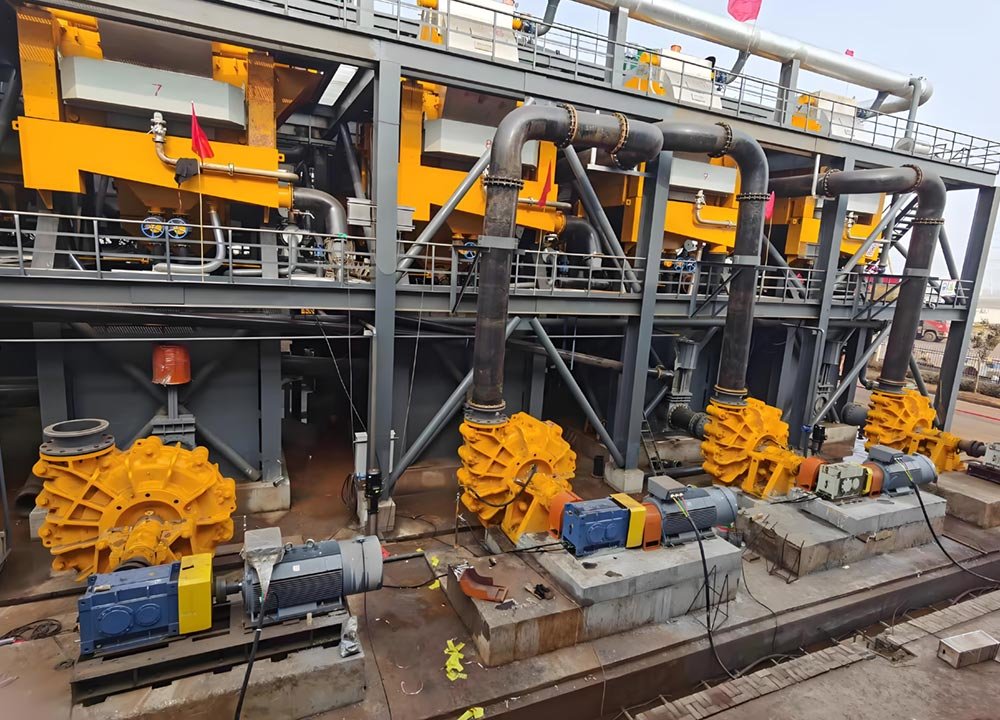
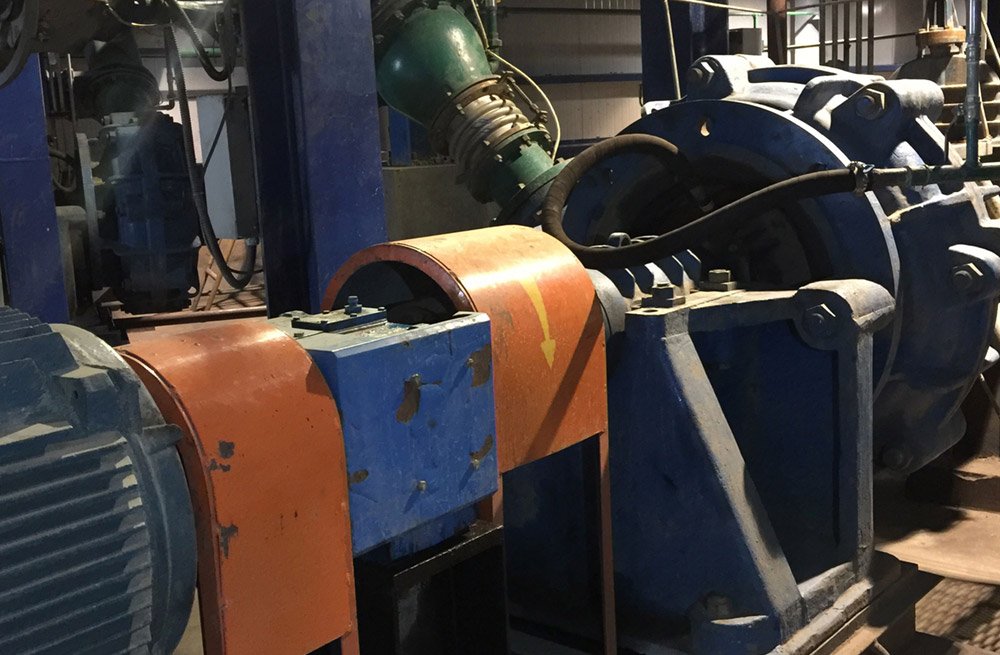
Hydrocyclone feed pumping in iron ore processing imposes the following technical constraints:
- Slurry with fluctuating solids concentration and particle size distribution
- Highly abrasive iron ore particles accelerating wear of hydraulic components
- Continuous-duty operation with limited maintenance windows
- Requirement for stable discharge pressure and flow to maintain cyclone separation efficiency
The pumping system was therefore required to combine wear resistance with hydraulic stability under variable slurry conditions.
Kingda R250KSH Cyclone Feed Pump
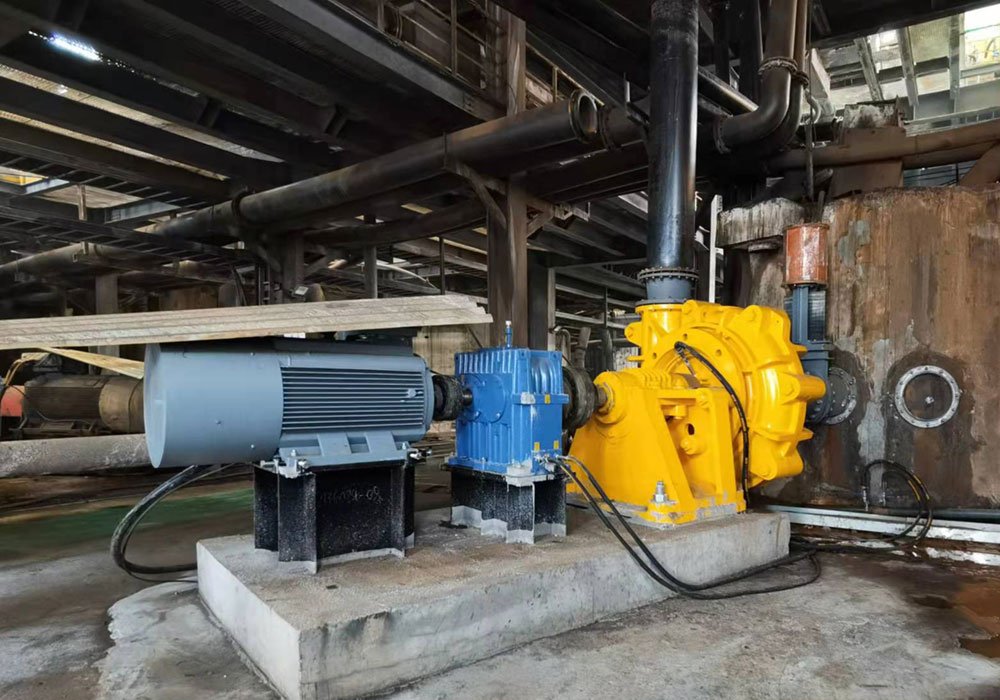
The selected R250KSH heavy duty cyclone feed pump was applied as the hydrocyclone feed unit based on the following design characteristics:
- Wear-resistant wet-end components, using elastomer-lined or alloy materials suitable for abrasive mineral slurries
- Heavy-duty shaft and bearing assembly designed for prolonged continuous operation
- Hydraulically optimized impeller and casing geometry to provide stable flow and pressure for cyclone feed duty
In service, the pump delivered slurry from the grinding circuit to the hydrocyclone cluster while accommodating variations in slurry density and particle loading.
Performance Observed During Field Operation
Field inspections conducted by Kingda service engineers after two months and again after twelve months of continuous operation indicated:
- The rubber liner and impeller exhibited only minor wear at both inspection intervals
- No abnormal hydraulic performance degradation was observed
- Stable feed pressure to the hydrocyclones was maintained throughout the operating period
These observations confirm that the pump maintained functional integrity and wear resistance under sustained abrasive service.
Share your application details with us to receive expert technical guidance and a customized pumping solution.
You can also request a consultation or download our PDF case collection.
Engineering Commentary from the Project Team
“Hydrocyclone feed service combines high abrasion with strict hydraulic stability requirements,” noted a site engineer involved in the pump evaluation.
“Our primary concern was whether the pump could maintain consistent pressure without rapid liner or impeller degradation.”
“Inspection results after long-term operation showed that wear progression was slow and predictable. This significantly reduced the risk of unplanned shutdowns in the classification circuit.”
“From an engineering standpoint, this case illustrates that matching pump wet-end materials and hydraulic design to the actual slurry characteristics is essential for achieving both reliability and process stability in mineral processing applications.”
Get free pump selection tips from Kingda experts.
Kingda is committed to providing the best fluid transfer solutions.
Contact Kingda for a free quote, pump selection, engineering advice, and pump maintenance tips.