Tunnel Boring Machine Slurry Systems & Pump Solutions
In underground tunnels tens or even hundreds of meters deep, the ability to smoothly pump gravel and mud to the surface requires highly efficient conveying equipment, with stability and no blockage being key factors.
What Is TBM Slurry System?
The tunnel boring machine slurry system is a closed-loop slurry transport system. Its main function is to transport the excavated material cut by the tunnel boring machine to the surface and maintain pressure balance at the excavation chamber.
In this closed-loop slurry transport system, the slurry pump is a key piece of equipment and plays a crucial role.
The excavated material cut by the cutterhead at the excavation chamber mixes with water to form slurry (a solid-liquid mixture). The slurry pump transports this slurry through pipelines to the separation plant.
After the separation plant separates the excavated material from the slurry, the slurry pump transports the clean slurry to the excavation chamber. The clean slurry mixes with the excavated material and is then transported back to the separation plant, thus forming a closed loop.

The tunnel boring machine (TBM) rotates its cutterhead to cut through the soil layer ahead. The excavated material mixes with water to form slurry, which is then pumped to the separation plant.
Simultaneously, the TBM advances forward via a hydraulic system, assembling concrete lining slabs to form the tunnel wall.
The separation plant separates the excavated material from the slurry. The slurry pump then returns the cleaned slurry to the excavation chamber, where it mixes again with the excavated material, creating a closed-loop system.
Through the coordinated operation of these systems, the TBM achieves efficient and safe tunnel excavation and is widely used in urban subways, highways, and other underground engineering projects.
How Slurry Circulation Works in TBM?
1. Excavation
The TBM machine excavates the soil layer in front of it with a cutterhead, and mixes the fallen soil with clean slurry delivered by a slurry pump. The slurry serves as the transport medium, making the soil transportable.
2. Pumping Slurry
Slurry containing slag is transported to the separation plant through large-diameter wear-resistant pipelines. This process usually requires overcoming pipeline resistance, height differences, etc. If the distance is too long, a booster pump station can be added in the middle to achieve segmented pressurization and improve system stability.
3. Separation Plant
The slurry produced from the excavation chamber is eventually transported to the ground separation plant, which separates the slag and slurry using equipment such as vibrating screens, hydrocyclones, and centrifuges.
4. Recirculation
The slurry that has been processed by the separation plant will be re-adjusted to make the slurry density, viscosity and other parameters meet the standards for reuse, and then returned to the excavation chamber through the return pipeline.

Have TBM slurry transport drawings or project specs?
Send them to info@kingdagroup.com for a tailored engineering solution and fast quotation.


High-Pressure Slurry Pump
- Discharge Diameter(mm): 100 ~ 400
- Capability(m³/h): 60 ~ 6000
- Head(m): 10 ~ 85

Submersible Slurry Pump
- Discharge Diameter(mm): 50 ~ 350
- Capability(m³/h): 30 ~ 3500
- Head(m): 10 ~ 85

Booster Pump Station
Booster pump stations are widely used in tunnel excavation, especially for transporting slurry through ultra-long pipelines, providing stable pressure to the TBM slurry system.
The Kingda booster pump station includes a feed pump, a discharge pump, a variable frequency motor, a transformer, a frequency converter, a control cabinet, and a seal flushing booster pump unit. The pump station control system is connected to the TBM control system for remote control.
Real-World TBM Slurry Transport from a 90m Deep Shaft
In a real-world example, we pumped high-solids-content TBM slurry from a 90-meter-deep shaft, making history for the city’s subway project.
We were responsible for the design and development of the entire slurry transport system for this subway tunneling project. This project presented two major challenges:
- Ultra-long-distance transport
- Significant height differences
To address these challenges, we added the Kingda Booster Pump Station, enabling slurry transport over ultra-long distances and with significant height differences. Our high-pressure slurry pump provided crucial support for the entire transport system.
Handling What Standard Slurry Pumps Cannot
Gravel pumps possess unparalleled abrasion and corrosion resistance, enabling long-term operation under harsh conditions without clogging. They can transport large-diameter solids that ordinary slurry pumps cannot.
Kingda gravel pumps feature a large-channel design and an anti-clogging impeller, ensuring efficient and smooth transport of high-solids slurries containing gravel and fibers, performing exceptionally well in TBM slurry systems.
Our pump wet end parts utilize high-chromium alloy abrasion-resistant materials. Their superior abrasion and corrosion resistance ensure long-term resistance to impacts from sharp, hard solids, maximizing service life and reducing operating costs.
Key Challenges in TBM Slurry Transport
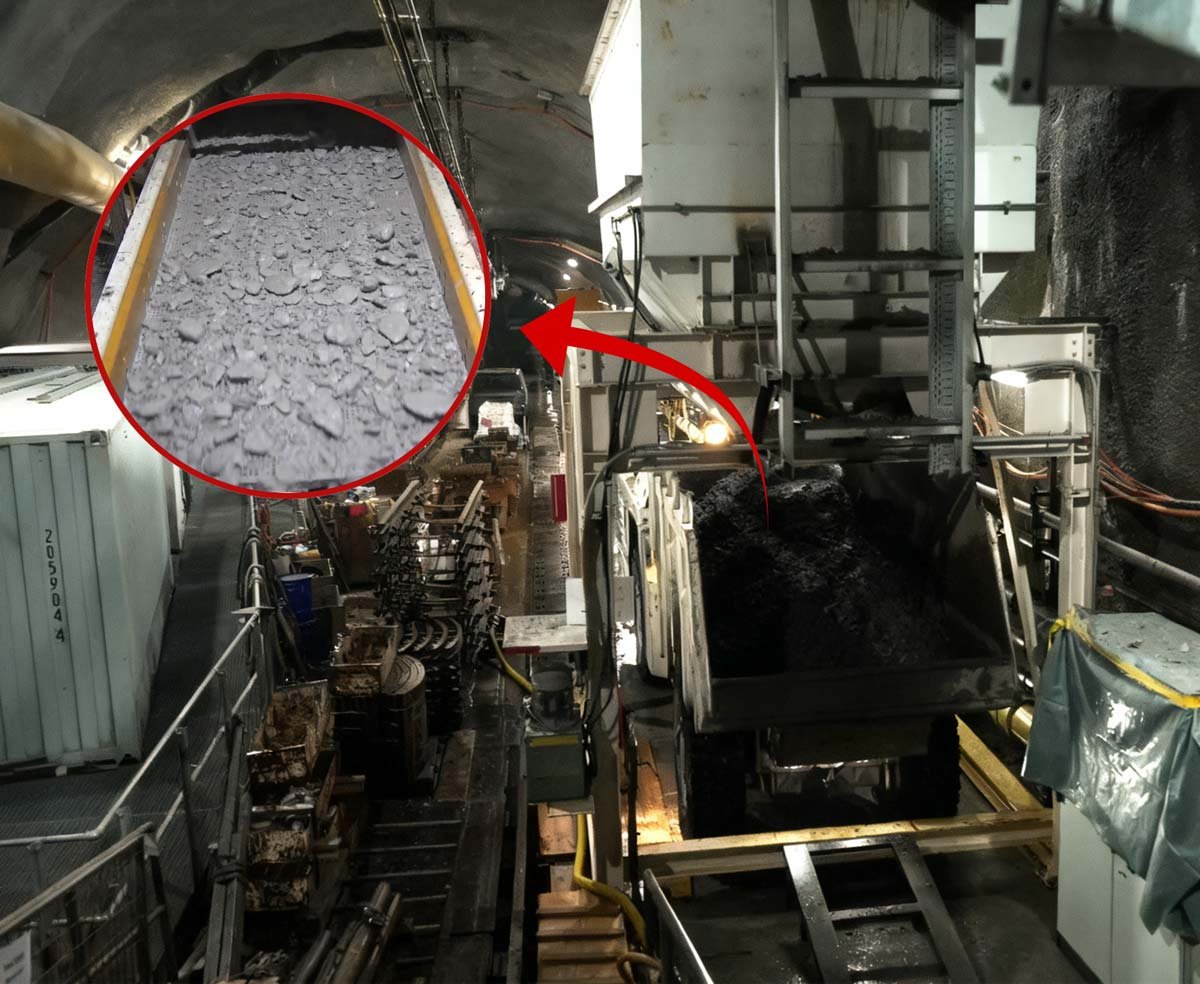
Engineers with experience in TBM slurry transport design know that moving slurry out of a tunnel presents numerous challenges. The solids cut from the soil are not only large in diameter but also hard and irregularly shaped, meaning they generate significant friction. This necessitates TBM pumps with excellent wear resistance and anti-clogging capabilities.
Typically, underground tunnels are long and have significant elevation differences from the ground, resulting in long overall slurry transport distances. This requires TBM pumps to provide stable pressure, ensuring the tunnel boring machine can advance steadily without downtime.
Here are four common challenges in TBM slurry transport:
- High solids concentration: Slurry with high solids content not only settles easily but also clogs pipes and pumps, and solids handling pumps can solve these problems excellently.
- Abrasive wear: Gravel and sand cut by the TBM cause severe abrasion to the pumps.
- Long-distance transport: Long-distance transport places particular demands on the pressure and stability of the slurry transport system.
- Continuous operation: Mid-journey TBM downtime results in substantial economic losses; stability and reliability are the biggest challenges for TBM slurry transport systems.
Check out the slurry pumping guide to learn about the challenges and solutions when pumping slurry.
Kingda Slurry Pump Requirements for TBM

High wear resistance
Kingda engineers have developed a high-chromium alloy wear-resistant and corrosion-resistant material specifically for the highly abrasive nature of TBM slurry, which maximizes the wear time of the TBM and extends the service life of the equipment.
High head capability
A high pump head means the ability to provide sufficient pressure to pump slurry further, which is an important indicator for long-distance transportation. Providing a stable pump head is even more crucial.
Non-clogging
Kingda engineers have specially optimized the impeller and flow channel design of the TBM slurry pump. Its excellent hydraulic performance and wide flow channel allow large-diameter solids and long fibers to pass through smoothly without clogging.
Stable operation
Stable operation is a crucial aspect of ensuring project progress and cost control. To minimize user operating costs, Kingda has added a booster pump station, ensuring that the slurry conveying system maintains high efficiency and stable long-term operation.
Applications in Underground Construction
Metro tunneling
In metro tunneling, where the transport distance is extremely long and the shafts are deep, a stable and reliable TBM slurry transport system is an essential option.
Utility tunnels
During urban construction, many utility tunnels need to be excavated simultaneously. This not only tests the stability of the TBM slurry transport system, but also requires it to provide high-efficiency transportation and accelerate the progress of the project.
Railway tunnels
Railway tunnels are typically carved into mountains, where hard gravel and large debris pose a significant challenge. The Kingda TBM pump enables these large-diameter solids to pass through smoothly.
Mining tunnels
Excavating tunnels is essential during mining operations, and digging mine shafts hundreds of meters deep puts a great strain on the wear and corrosion resistance of slurry transport systems.

TBM Slurry Transport System Design Considerations
Slurry density
TBM slurry density is a crucial parameter that directly impacts the load, pressure, and transport efficiency of the TBM pump and pipeline.
TBM slurry density changes in real time based on variations in formation and water content. Therefore, the design of the transport system must include online density monitoring and the ability to automatically adjust the slurry density.
Particle size
Particle size is a crucial parameter determining whether a TBM pump will become clogged and the wear rate of the conveying system.
TBM slurry contains a large amount of gravel, pebbles, and fibrous impurities. Therefore, when designing a conveying system, the maximum solids throughput diameter and stable conveying performance of the TBM gravel pump must be considered.
Head calculation
Pump head calculation is the core of the entire slurry transport system. The head includes not only the static head but also the friction head.
Accurate pump head calculation can not only reduce energy consumption but also extend the service life of the equipment.
Pipeline length
In TBM projects, slurry transport distances typically span several kilometers. These long distances and numerous bends result in significant frictional losses.
When designing the transport system, the pipeline route should be optimized to minimize the number of bends. A suitable TBM pump should be selected, ensuring sufficient redundancy to handle frictional losses over long distances and maintain stable pressure.
Alternatively, a booster pump station can be added for staged pressurization, reducing the load on individual pumps while maintaining a stable system flow rate.

Why Pump Reliability Matters?
Pump reliability is paramount. As the core equipment of the conveying system, the TBM pump is responsible for circulating the slurry from the tunnel boring machine. A failure in the TBM pump can paralyze the entire project, preventing the removal of excavated rock from the tunnel and forcing a halt to tunnel excavation.
TBM downtime not only results in significant economic losses but also impacts the overall tunnel project schedule. Therefore, the reliability and stability of the TBM pump must be carefully considered when selecting one.
Kingda Slurry Pump Real World Applications
Kingda’s cooperation cases include custom pumps for dredging vessels, mining, tunnel boring, and desulfurization, driving performance and efficiency across industries.
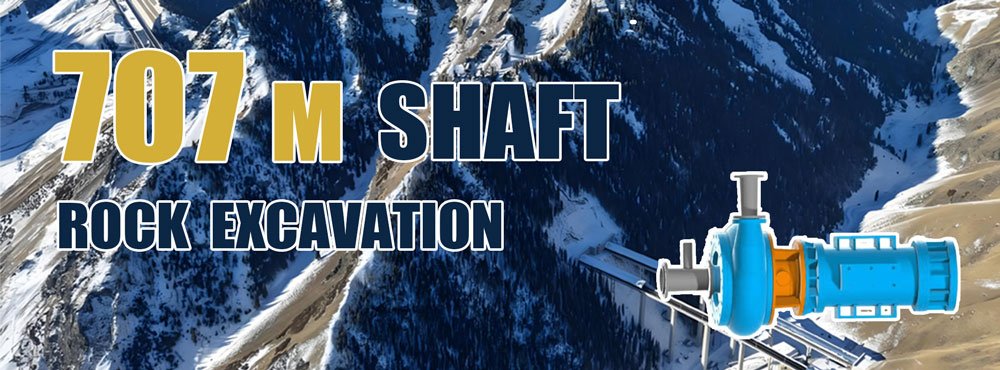
An ultra-deep ventilation shaft project requiring stable slurry transport under high head and high solids conditions.
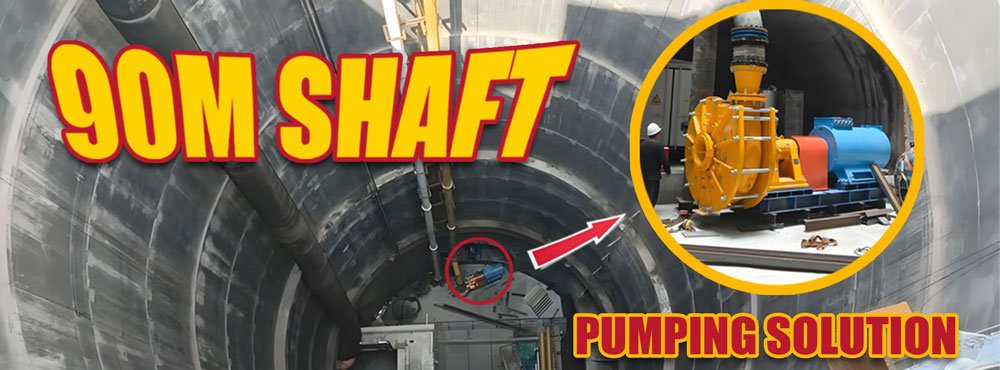
A deep metro shaft project requiring long-distance, high-head slurry pumping under high pressure and abrasive conditions to support tunnel excavation.
Get free pump selection tips from Kingda experts.
Kingda is committed to providing the best fluid transfer solutions.
Contact Kingda for a free quote, pump selection, engineering advice, and pump maintenance tips.