Agricultural Irrigation and Manure Slurry Pumping Systems
High-efficiency and reliable pumping solution for irrigation, manure slurry, fertigation, lagoon pumping, wastewater reuse, and drainage.
Common Pumping Applications in Agriculture & Irrigation

Irrigation
In large-scale agricultural irrigation systems, pumping equipment is mainly used for transporting water from rivers, reservoirs, and canals to irrigation systems and farms, ensuring a stable water supply.
We know that reservoir water and canal water are not simply clear water; they typically contain a lot of solid matter such as sand and gravel. Ordinary water pumps cannot withstand the long-term scouring of these particles, so we need pumping equipment capable of transporting this solid-containing water for extended periods.

Manure Slurry
In manure slurry applications, slurry pumps are used to suction and transport manure to manure treatment systems, typically found in pig farms, cattle farms, and other manure treatment facilities.
Because manure contains a significant amount of long fibers and solids, and is highly corrosive, our engineers prioritize the anti-clogging and corrosion-resistant properties of the pumping equipment when designing manure pumping solutions. This ensures the smooth passage of large solids and long fibers, and corrosion-resistant materials are used to prevent manure corrosion.

Fertigation
Fertigation represents the mainstream development trend of future agricultural irrigation because it delivers not only water but also fertilizers and nutrient solutions, requiring precise flow control.
Our engineers, when designing fertigation pumping solutions, ensure stable flow delivery from the pumping equipment. The wet end parts of the pumps are made of wear-resistant and corrosion-resistant alloy materials, guaranteeing long-term delivery of chemical fertilizers without corrosion.

Lagoon Pumping
Lagoon pumping is a typical application in agriculture. Pumping solution systems are commonly used in lagoon circulation, sediment removal, and farmland fertilization.
In this application, because it is necessary to pump high-viscosity slurries, manure slurries, and sedimented mud, the pumping equipment needs to be able to operate in deep pits and handle easily settling slurries such as silt and high-viscosity materials.

Wastewater Reuse
Wastewater reuse is increasingly used in agriculture, and slurry pumps can be used in wastewater transportation, sludge treatment, and reclaimed water transportation.
Wastewater typically contains solid particles, sludge, and corrosive substances. When designing wastewater reuse pumping solutions, engineers should pay attention to the corrosion and abrasion caused by solid impurities, as prolonged wastewater treatment can cause significant damage to pumping equipment. Therefore, wear-resistant and corrosion-resistant materials should be selected to reduce maintenance costs.

Drainage
Farmland drainage is an essential option during floods, encompassing rainwater and floodwater transport, as well as the discharge of field wastewater.
When farmland drainage is required, large flow rates are typically needed to quickly remove rainwater, sewage, and silty wastewater. This necessitates pumping equipment with not only high flow rate capabilities but also excellent anti-clogging performance, as it needs to operate for extended periods during emergency drainage operations to prevent blockages or shutdowns during floods, which could lead to even greater losses.
Have irrigation drawings, slurry data, or agricultural pumping requirements?
Send them to info@kingdagroup.com for a faster, application-focused pumping solution.
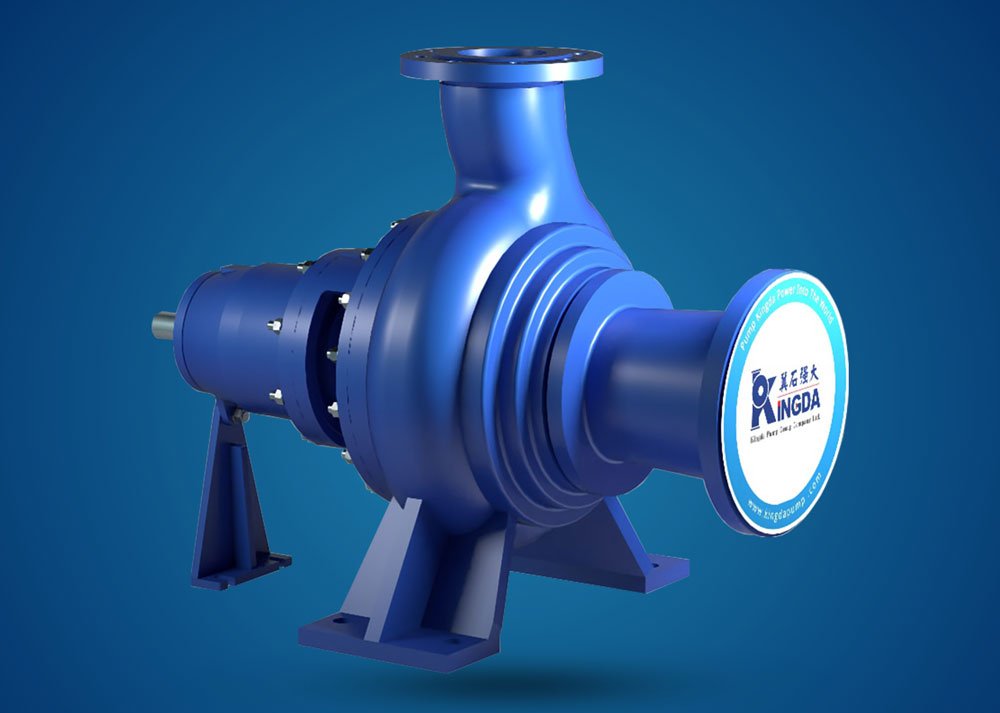
The Kingda KWP series no-clogging slurry pump is an agricultural irrigation pump specifically designed for treating river and reservoir water, as well as industrial wastewater containing solid slurries. Its excellent solids throughput ensures the smooth pumping of large solids, long fibers, and other debris.
To enable the agricultural irrigation pump to deliver high-solids slurries over extended periods, Kingda engineers utilized a high-chromium alloy non-clogging impeller. This design guarantees exceptional wear resistance and effectively prevents clogging, minimizing maintenance frequency and extending service life.
Challenges in Agricultural Slurry & Irrigation Systems
Abrasive Solids
In irrigation systems, abrasive solids can cause significant frictional damage to pumps, posing a major challenge to pumping equipment. Prolonged solid friction can lead to substantial erosion of the pump impeller and volute.
Fibrous Manure
Engineers with experience in designing sludge pumping projects know that sludge contains a large amount of long fibers, weeds, or other debris, which can easily entangle the impeller and shaft, leading to a decrease in flow rate, an increase in motor load, and even causing the pump to fail to draw in material.
Corrosion
In mining areas of Africa, the Middle East, and South America, the water source for farmland irrigation is mostly not clean water, but a slurry containing a lot of impurities and corrosive substances. These corrosive substances are in long-term contact with the metal surface of the pump, which will cause the metal to corrode, resulting in the metal becoming thinner and cracking.
Clogging
Clogging is one of the most common problems in agricultural pumping projects. High-solids manure, high-viscosity slurry, and long-fiber manure slurry can easily clog the inlet, entangle the impeller, and ultimately cause the pumping equipment to shut down.
Long-Distance Transfer
In large-scale farmland irrigation systems, there are usually long delivery pipelines to meet the irrigation needs of large areas of farmland. In this case, the pumping equipment needs to have sufficient pressure to avoid insufficient flow, especially when pumping liquids containing solids. Pipe friction losses also need to be considered.
Unstable Flow
Unstable flow rate is a major problem in agricultural irrigation, especially when pumping manure slurry or fibrous fertilizers. Because the medium can change at any time, the flow rate can fluctuate greatly, which can directly affect pumping efficiency, reduce irrigation effect, and even shorten the life of pumping equipment.
Sewage Pump
Discharge Diameter(mm): 40 ~ 500
Capability(m³/h): 10 ~ 3000
Head(m): 5 ~ 80

Split Case Pump
Discharge Diameter(mm): 300 ~ 1000
Capability(m³/h): 1000 ~ 18000
Head(m): 22 ~ 170

Submersible Slurry Pump
Discharge Diameter(mm): 50 ~ 350
Capability(m³/h): 30 ~ 3500
Head(m): 10 ~ 120

Vertical Sump Pump
Discharge Diameter(mm): 40 ~ 300
Capability(m³/h): 18 ~ 1267
Head(m): 4 ~ 40
The Kingda vertical sump pump operates with its suction end fully submerged in liquid and can be equipped with a cutterhead and filter. This effectively reduces clogging caused by large solids and long fibers, improves conveying efficiency, and reduces energy consumption.
The vertical structure of the vertical sump pump is more stable and easier to maintain. With the motor above the water level, the dry environment ensures more reliable motor operation, avoiding problems such as seal damage and liquid corrosion. Reliability and stability are our promise to our users.
Why Kingda for Agricultural Pumping Projects
Wear-Resistant Materials
Kingda offers a wide variety of wear-resistant materials perfectly suited to your operating conditions, including high-chromium alloys, elastic rubber, and stainless steel. Our engineers are dedicated to creating stable and efficient agricultural pumping solutions for our users.
High Solids Handling
To efficiently handle high-solids slurry, Kingda engineers redesigned the impeller and flow path, enhancing the hydraulic performance and redundancy of the slurry pump to ensure stable slurry delivery even in unstable and complex conditions.
Customized Systems
Undoubtedly, no project is repeatable or replicable. The circumstances and challenges that need to be considered in the entire pumping system are different. However, this is exactly what we do well, and our engineers are able to handle these formidable challenges.
Long-Distance Transfer
Kingda has extensive project experience in long-distance and ultra-long-distance transportation, including pump tandem and Kingda booster pump stations. We have reliable solutions for these applications, with the aim of minimizing users' operating costs.
Engineering Support
From the design of the user's pumping project to the final installation of the pumping equipment and subsequent maintenance, we have professional engineers to work with you at every stage. Their solid technical foundation ensures that your project can operate stably.

Agricultural Water Reuse & Irrigation Pumping Project
Since 1948, as one of the first slurry pump manufacturers in China, we undoubtedly possess a wealth of project experience.
This valuable practical experience ensures that we can quickly and reliably solve any challenges we encounter.
Large-Scale Agricultural Irrigation Reuse Project
This project is a typical large-scale agricultural irrigation reuse project, aiming to improve the region’s agricultural irrigation capacity and water resource reuse efficiency.
The project directly connects to the wastewater treatment plant’s greywater reuse system and directly delivers treated wastewater to the agricultural and forestry irrigation system to enhance the region’s sustainable agricultural development.
Challenges
Daily Processing Capacity: 100,000 m³/day (high-flow continuous operation)
Greywater Storage Tank: 7.3 million m³ (sedimentation)
Water Transmission Pipeline: 13 km (long-distance transmission)
Agricultural and Forestry Irrigation Area: 22,813 mu (approximately 184 hectares)


Solution
Kingda engineers designed a reliable and highly wear-resistant transmission solution for this project.
Engineers designed highly wear-resistant wet end parts, using high-wear-resistant alloy materials, to address the abrasive solids such as suspended particles and fine sand contained in the recycled water, thus resisting long-term erosion by solid particles and extending the wear life of the pumping equipment. Simultaneously, a Kingda booster pump station was installed along the route to ensure a stable water supply during peak agricultural and forestry irrigation periods.
Results
Six months after the project was completed and operational, our engineers conducted a follow-up visit and found that the pump’s highly wear-resistant components (impellers) showed almost no wear. This is crucial for a stable water supply for agricultural irrigation.
After consulting with local staff, they stated that the project significantly improved water reuse rates in the area, reduced groundwater consumption, and enhanced irrigation stability.
Get free pump selection tips from Kingda experts.
Kingda is committed to providing the best fluid transfer solutions.
Contact Kingda for a free quote, pump selection, engineering advice, and pump maintenance tips.
FAQ
The best pump for manure slurry is the slurry pump. Because manure slurry contains a large amount of solids, long fibers, and even corrosive substances, the slurry pump's excellent solid throughput and wear-resistant and corrosion-resistant materials enable it to reliably and stably transport manure slurry.
We can reduce the appearance of blockages by increasing the frequency of maintenance. Here are the maintenance methods:
- Add a stirring device to the pipe inlet to suspend deposited silt in the water, increasing pumping efficiency.
- Add a filtration system to the suction inlet to block large solids and long fibers.
- Clean the pump body and pipes regularly to remove residual waste and prevent it from accumulating in the pipes.
The best pump for solids slurry is the slurry pump. As is well known, the solids in high-solids slurry have high abrasiveness. After the pump is flushed for a long time, the metal surface will be severely worn. However, the wet end parts of the slurry pump are made of high-chromium alloy and wear-resistant rubber, which can effectively avoid wear.