Filter Press Feed Pump
A filter press feed pump is a pump specifically designed to pump slurry into a filter press. The pump pressurizes the slurry and sends it into the filter press. It is mainly used in the feeding and filtration stages to achieve solid-liquid separation of the slurry and form a filter cake.
What is a Filter Press Feed Pump?
Definition
A filter press feed pump is a pumping device used in industrial solid-liquid separation processes. It is typically used in the feeding and filtration stages to provide a stable flow rate and pressure to the filter press, enabling efficient solid-liquid separation.
It is widely used in mining, wastewater treatment, chemical, pharmaceutical, and food processing industries.
Difference from ordinary slurry pumps
Ordinary slurry pumps typically operate around a relatively stable operating point, while filter press feed pumps have a wider operating range, with their pressure and flow rate varying gradually throughout the filtration process.
From high-flow-rate filter chamber filling to a low-flow-rate, high-pressure filtration stage, as the solids within the filter chamber gradually increase, the slurry requires greater pressure to fill the chamber. At this point, the pressure gradually increases, while the flow rate gradually decreases.
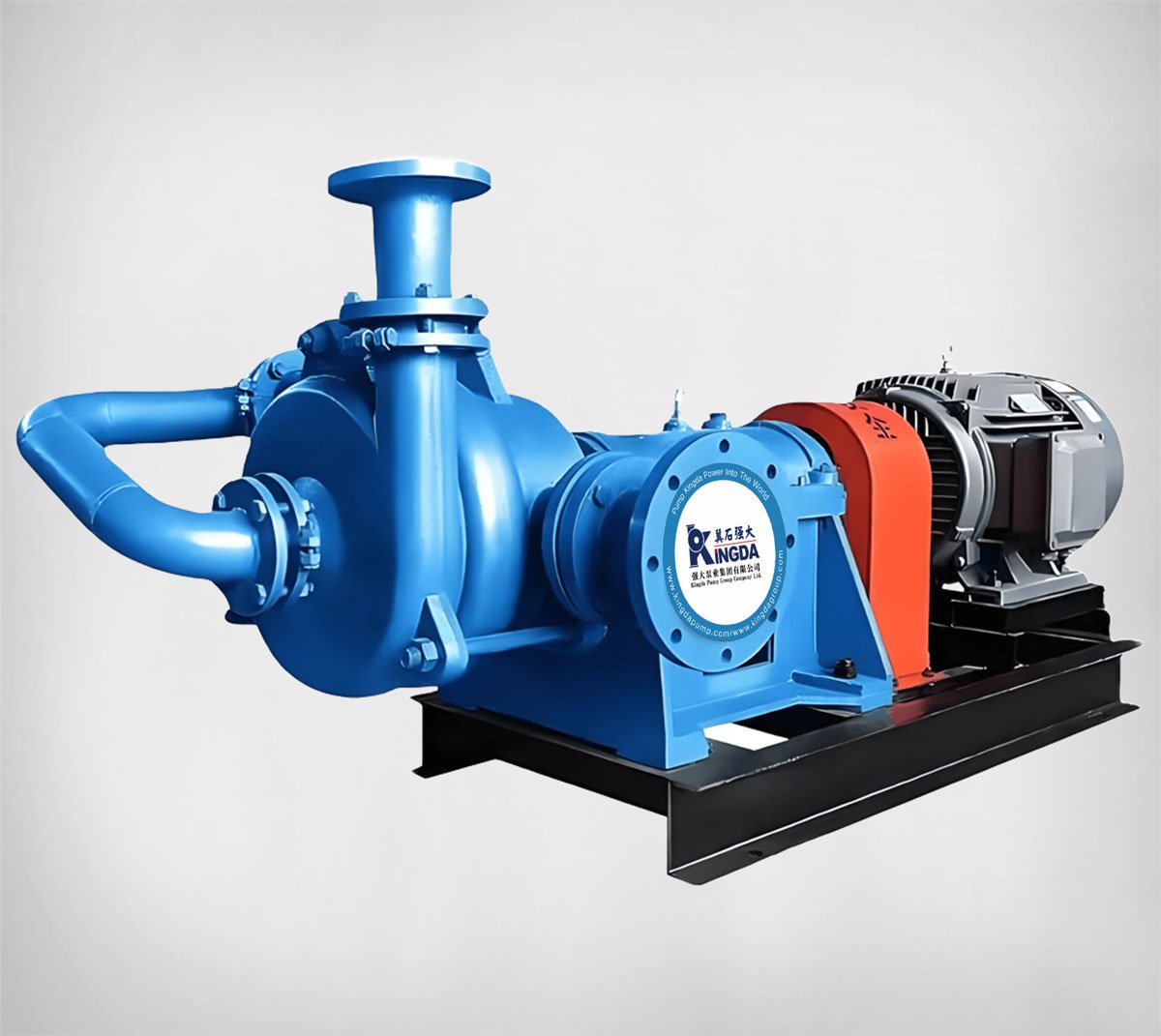
The Kingda ZJW filter press feed pump features a heavy-duty design, ensuring stability and reliability to withstand designed for abrasive slurry duties. Its horizontal structure makes the pump more robust, enabling it to deliver high initial flow capacity and high-pressure slurries, supporting filter press feeding requirements of filter presses.
The wet end parts of the ZJW filter press feed pump are made of high-chromium alloy or wear-resistant rubber, allowing it to withstand the impact and friction of high-hardness particles, improving pumping stability, helps improve wear life under suitable operating conditions, and may reduce maintenance requirements when properly selected.
How Does a Filter Press Feed Pump Work?
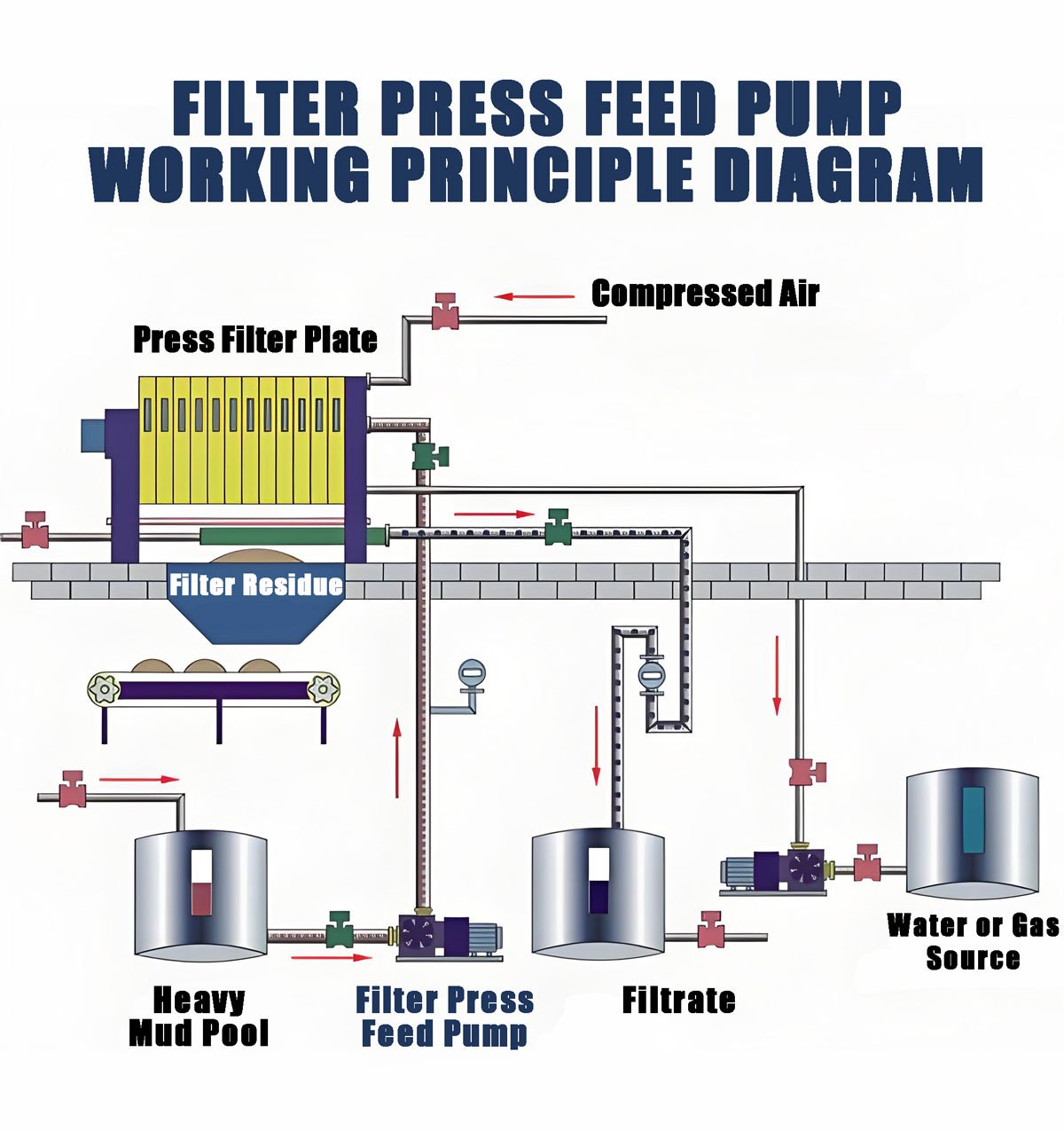
Before explaining how a filter press feed pump works, you need to understand the operation of a filter press. It’s important to note that the filter press itself doesn’t directly provide pressure; it’s merely the main device for forming the filter cake. The pressure is provided by the filter press feed pump.
Next, I will explain “How Does a Filter Press Feed Pump Work?” through its four operational steps.
1. Initial Filling Stage
In the initial filling stage, the filter press feed pump needs to quickly fill the filter chamber with slurry. At this stage, the flow rate is at its maximum and the pressure is at its minimum, with the aim of rapidly injecting the slurry.
2. Chamber Filling Stage
As the slurry continuously enters the filter chamber, eventually forming chamber filling, the slurry flows out through the filter cloth, while the solids remain in the filter chamber. At this point, the pressure increases while the flow rate decreases, and the filter press feed pump pumps the slurry into the filter chamber at even higher pressure.
3. Cake Formation Stage
Once the filter chamber is filled, the resistance to the slurry increases, and the filter press feed pump will provide greater pressure to deliver the slurry. During this process, the pressure continuously increases while the flow rate gradually decreases. Eventually, the solids in the filter chamber are compressed into a filter cake.
4. Terminal Feed Stage
Once the filter cake has formed, the resistance to the slurry reaches its maximum. At this point, the filter press feed pump reaches its designed final feed pressure, and the flow rate drops to a lower range. Ultimately, the system terminates the feeding process based on the pressure, flow rate, and filtrate condition.
Why Is Pump Selection Critical for Filter Press Performance?
Pump selection is crucial for filter press performance, directly affecting cycle time, cake dryness, filtration efficiency, and energy consumption. Choosing an unsuitable pump can lead to excessively long cycle times, low filtration efficiency, premature filter media failure, and prolonged downtime.
Cycle time
When selecting a filter press feed pump, it is essential to carefully calculate the appropriate flow rate and head range to ensure stable and continuous delivery of high-pressure slurry. Selecting an undersized pump will increase the filling time, thereby extending the overall cycle time.
Cake dryness
A suitable filter press feed pump can maintain stable and controllable flow and pressure, thereby ensuring the smooth formation of the filter cake. Unstable or uncontrolled flow will affect the formation of the filter cake, resulting in poor solid-liquid separation effect of the filter press.
Filtration efficiency
With the right pump, the appropriate flow rate and pressure can be provided stably, improving the filter cake forming efficiency, reducing circulation time, and ultimately improving filtration efficiency.
Energy consumption
Choosing the right filter press feed pump can not only maintain high filtration efficiency, but also extend the pump's lifespan and reduce downtime, thereby reducing energy consumption and operating costs throughout the entire operating cycle.
Types of Filter Press Feed Pumps
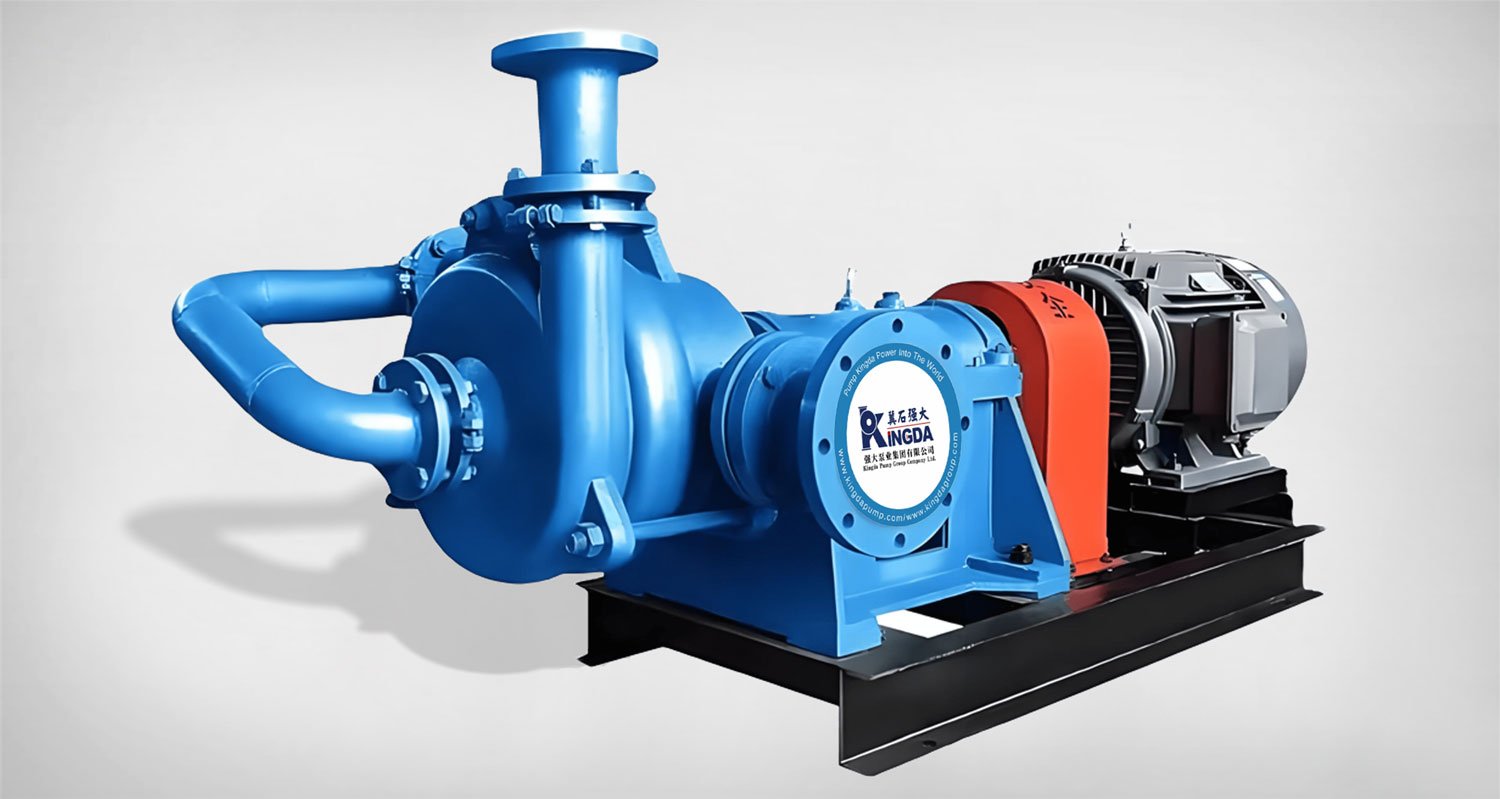
Centrifugal Slurry Pump
Centrifugal slurry pumps are commonly used in industries such as mining, tailings mining, coal mining, and metal mining. They are made of wear-resistant alloys and rubber, and are characterized by wear resistance, a wide flow range, and ease of maintenance.
Centrifugal pumps utilize the centrifugal force generated by the rotation of an impeller to continuously pressurize the slurry and pump it to a filter press.
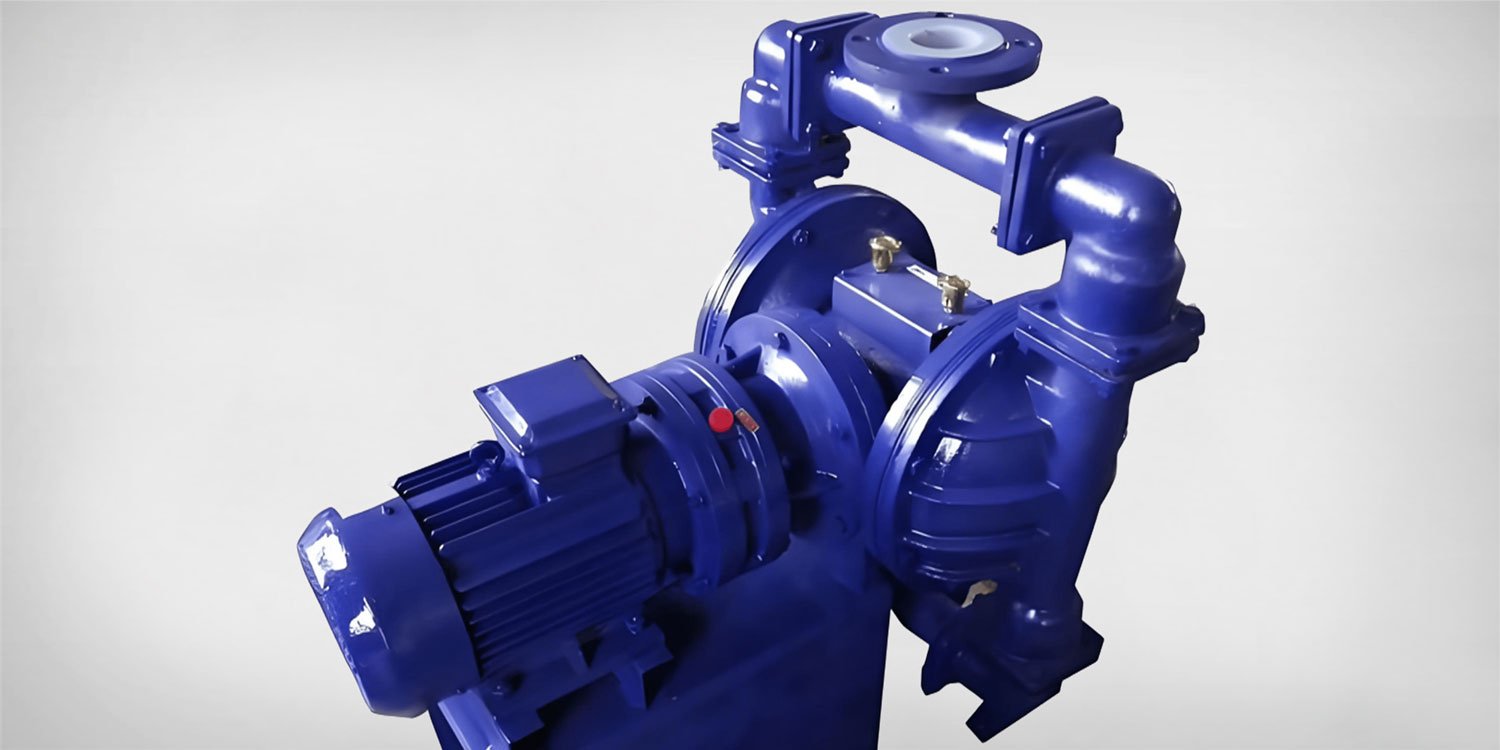
Piston Diaphragm Pump
Piston diaphragm pumps are commonly used in large-scale mining and high-pressure filtration applications. They utilize a piston to drive hydraulic oil, which in turn causes the diaphragm to reciprocate, thus propelling the fluid.
Piston diaphragm pumps can provide high discharge pressures within the pump’s rated operating limits and can handle slurries with high solids content.
Progressive Cavity Pump
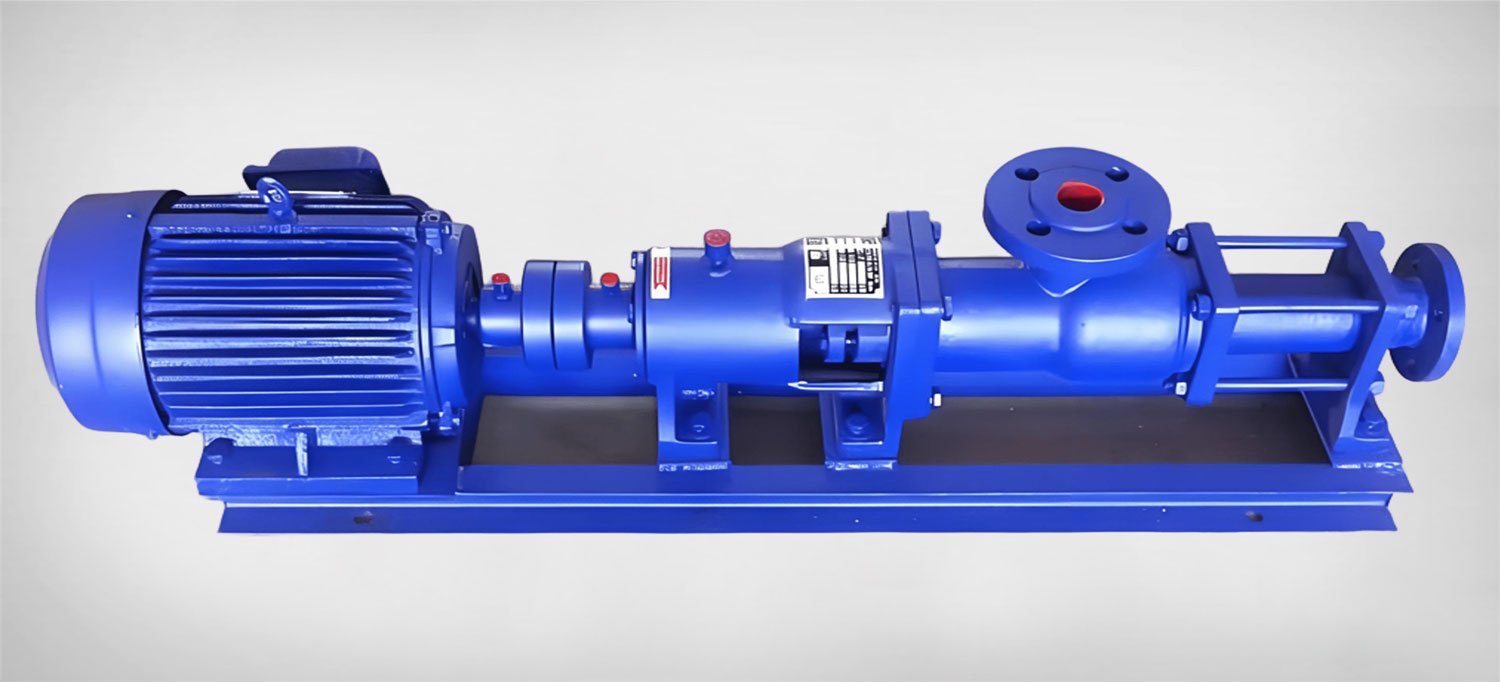
Progressive cavity pumps utilize the continuous propulsion of a rotating rotor to transport highly viscous sludges. They offer relatively smooth, low-pulsation flow, self-priming capabilities, and are suitable for complex operating conditions.
Progressive cavity pumps are commonly used in industries such as sludge dewatering, food processing, and paper mills.
Air-Operated Diaphragm Pump
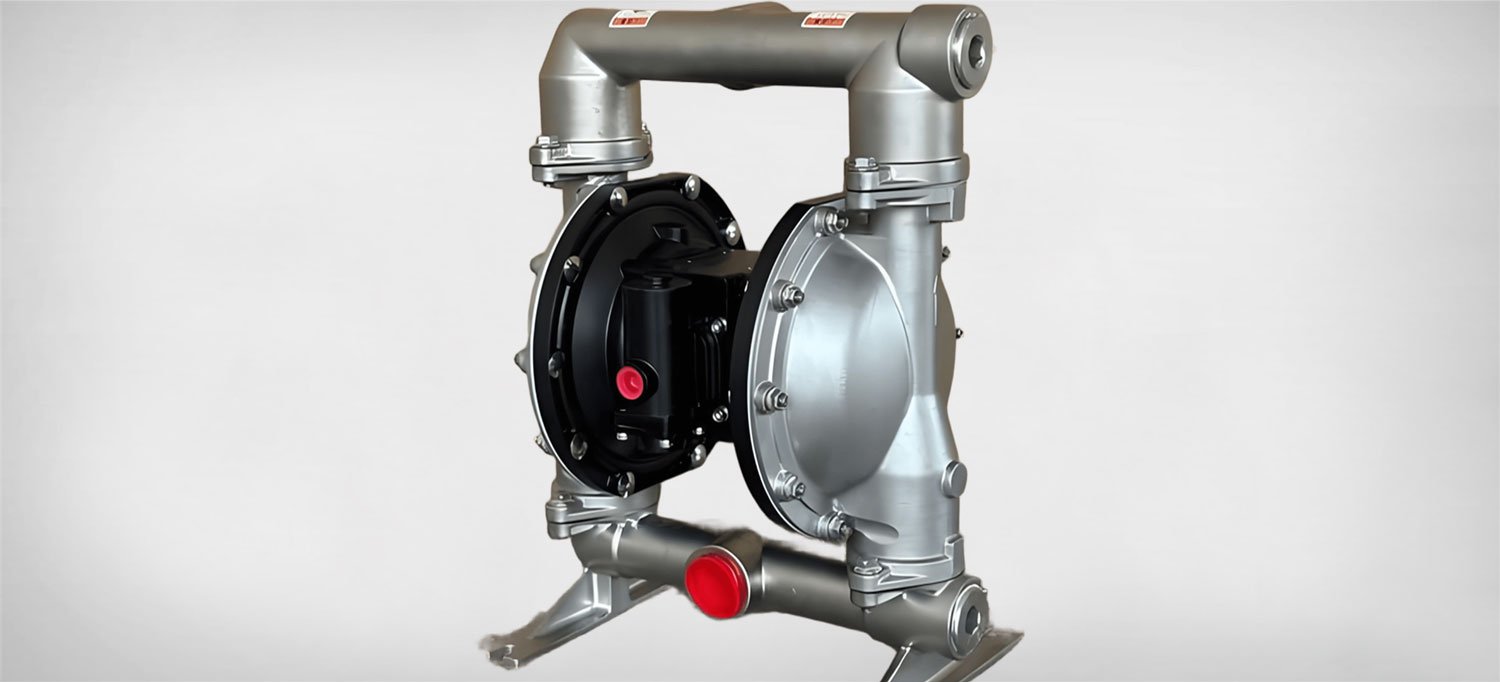
An air-operated diaphragm pump (AODD pump) uses compressed air to cause a diaphragm inside the pump to reciprocate, drawing in and expelling slurry.
The wet end parts of an AODD pump are made of corrosion-resistant materials, achieving excellent corrosion resistance and enabling the transport of certain acidic, alkaline, and chemically corrosive slurries.
Peristaltic Pump
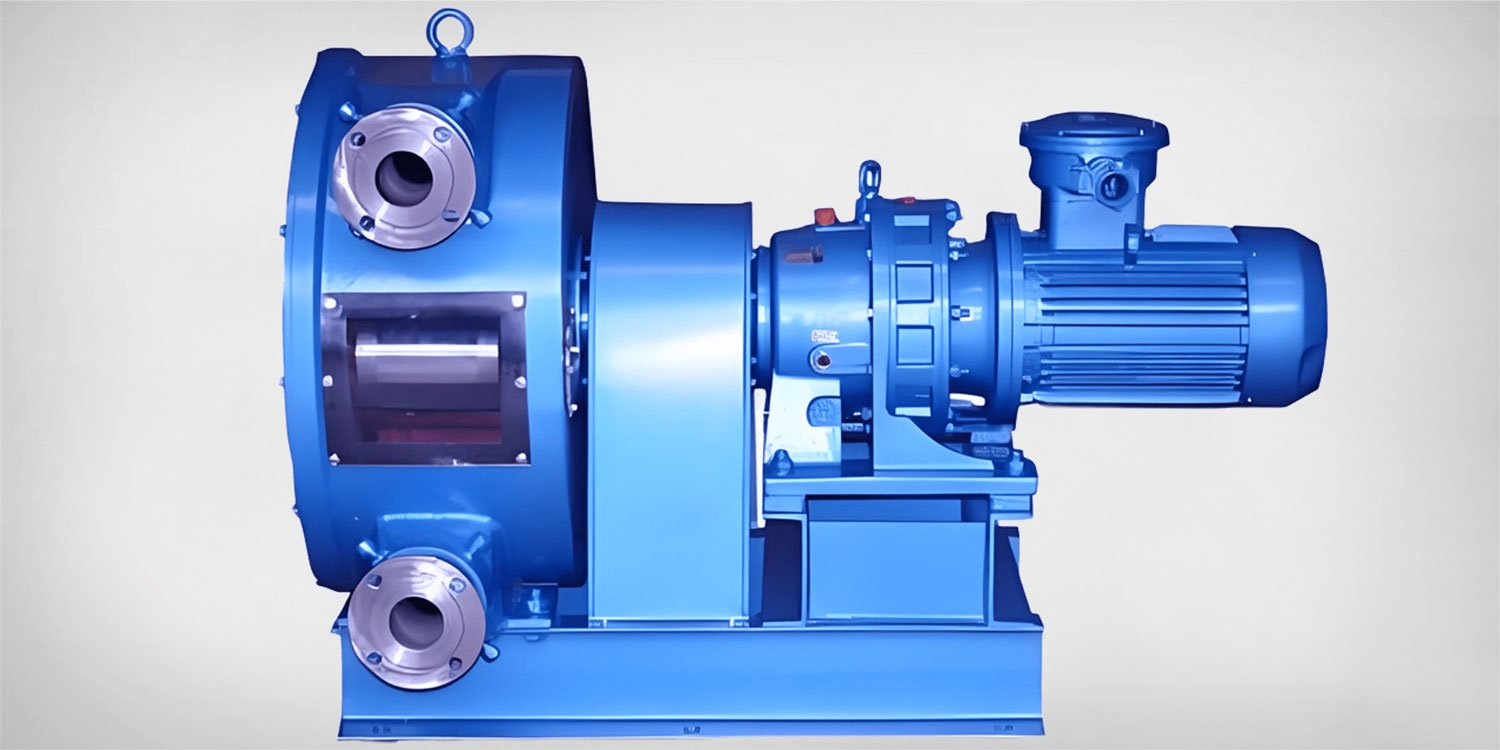
A peristaltic pump uses a rotating roller to continuously roll and compress a hose, thus constantly moving the slurry inside the hose, much like squeezing toothpaste. Because the slurry only contacts the hose, and the hose is made of corrosion-resistant materials, it has good corrosion resistance.
It is commonly used in laboratories, chemical plants, and other applications requiring precise flow rates.
Plunger Pump
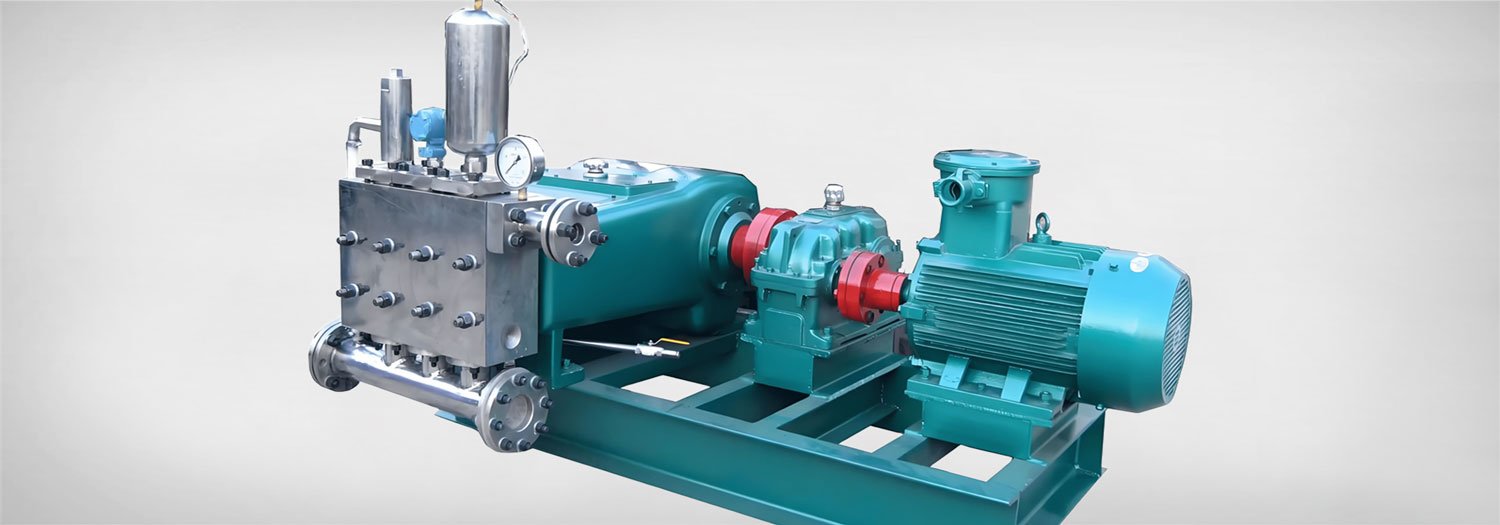
The plunger pump directly moves the slurry through the reciprocating motion of the plunger. The plunger pump can provide high discharge pressure and can be used for high-pressure operations within the limits of rated pressure, flow rate and other specifications.
Need Help Selecting the Right Filter Press Feed Pump?
Choosing the right pump depends on slurry characteristics, pressure requirements, and operating conditions.
Share your application details with our engineers, and we’ll recommend the best solution for your filtration system.
Comparison of Filter Press Feed Pump Types
| Types | Working | Advantages | Disadvantages | Applications |
|---|---|---|---|---|
| Centrifugal Slurry Pump |
Impeller centrifugal acceleration slurry |
🔸Wear-resistant 🔸High flow rate 🔸Simple structure 🔸Low cost |
Limited pressure leads to decreased efficiency when deviating from optimal operating conditions |
🔸Mine tailings 🔸Coal slime 🔸Ore dressing plants |
| Piston Diaphragm Pump |
The piston drives the diaphragm to deliver the slurry via hydraulic oil |
🔸High-pressure capability 🔸Controllable flow with suitable speed or stroke control 🔸Can handle high-solids slurries within rated limits |
🔸High price 🔸Complex hydraulic system maintenance |
🔸Large-scale mining 🔸High-pressure filtration 🔸Long-distance transportation |
| Progressive Cavity Pump |
The rotor and stator form a sealed cavity for continuous pushing |
🔸Smooth, low-pulsation flow 🔸Suitable for many viscous sludges 🔸Low-shear pumping |
The stator is prone to wear and is not suitable for highly abrasive slurries |
🔸Sludge dewatering 🔸Food 🔸Papermaking |
| AODD Pump |
Compressed air drives the reciprocating motion of the double diaphragm |
🔸Suitable for hazardous-area duties when appropriately certified 🔸Self-priming capability 🔸May tolerate limited dry running within manufacturer limits 🔸Multiple wetted-material options for compatible chemicals |
🔸Low energy efficiency 🔸Limited flow 🔸High operating costs |
🔸Chemical 🔸Pharmaceutical 🔸Explosion-proof environments |
| Peristaltic Pump |
Roller squeezes hose to push slurry |
🔸No mechanical seal 🔸Medium only contacts the hose 🔸Corrosion resistant |
🔸Low flow rate 🔸Limited hose life |
🔸Chemical industry 🔸Laboratory 🔸Metering transportation |
| Plunger Pump |
Plunger directly pressurizes slurry |
🔸High-pressure capability 🔸Consistent displacement under suitable operating conditions |
The seal wears out quickly and is not suitable for highly abrasive slurries |
🔸Specialized high-pressure processes 🔸Special industrial applications |
How to Select Filter Press Feed Pump?
Step 1: Evaluate Slurry Characteristics
Assessing the properties of the slurry is the first step in the selection process. The properties of the slurry determine the structure, material, and lifespan of the pump. When selecting a pump, we need to make a decision based on characteristics such as solids content, particle size, specific gravity, and viscosity.
Solids Content
Solids content refers to the proportion of solid particles in the slurry, usually expressed as a mass percentage.
Higher solids concentration results in greater pumping resistance, making pipelines more prone to clogging and increasing the pump load. Conversely, too low a concentration leads to longer filtration cycles and higher filter cake moisture content.
Specific Gravity
Specific gravity (SG) affects the power of the motor and the load on the pump shaft. The higher the slurry density, the greater the power required by the motor for a given flow rate and pressure. Specific gravity must be considered when selecting a motor.
Particle Size
The particle size and compressibility of the particles affect the degree of wear and filtration time. Large particles cause greater scouring and wear on the impeller, while small particles lead to increased flow resistance.
Viscosity
The viscosity of the slurry determines how easily it flows. The higher the viscosity, the greater the flow resistance, the higher the power consumption of the pump, and the lower the pumping efficiency. When pumping high-viscosity slurries, engineers usually recommend using screw pumps.
Step 2: Determine Required Flow Rate
The flow rate determines the duration of the entire filtration cycle of the filter press. The flow rate should be determined based on the project’s actual daily processing capacity, daily operating time, and the filter press’s chamber capacity.
Excessive flow rate can easily damage the filter cloth; therefore, the flow rate should be determined according to actual needs.
Step 3: Calculate Required Pressure
When calculating the pressure required for a filter press feed pump, the maximum permissible feed pressure specified by the filter press manufacturer should be referenced.
Pipeline losses and elevation differences should be taken into account, and the actual operating point of the pump under low flow conditions at the end should be checked to ensure sufficient pressure in the early stage of filtration.
Step 4: Consider Abrasion and Corrosion
When selecting a model, abrasiveness and corrosiveness should be considered. For example, tailings contain a large number of hard quartz particles, which will cause serious wear to the impeller if they are washed for a long time. Ordinary metal materials will corrode when in contact with acid or alkali slurries. Therefore, attention should be paid to the selection of materials.
Step 5: Match Pump Material
Matching the right materials can maximize the service life of the pump. For example, high-chromium alloys are selected for high-abrasion and low-corrosion conditions, rubber materials are selected for fine particles and abrasive conditions, and stainless steel or other corrosion-resistant materials are selected for chemical slurries such as strong acids and strong alkalis.
Step 6: Select Motor and VFD
The motor speed should be determined according to the actual required flow rate and pressure to ensure good working efficiency. When variable speed control is required, a VFD frequency converter can be used to adapt to changes in flow rate and head during the filter press process, avoiding the risks of wear and leakage.
Find the Right Filter Press Feed Pump for Your Application.
Email your application requirements to info@kingdagroup.com for a professional pump recommendation from our engineering team.
Filter Press Feed Pump Common Applications
Mining and Mineral Processing
In mining and mineral processing, the filter press feed pump is responsible for pumping the thickened tailings from the thickener into the filter press.
In this process, the tailings are extremely abrasive and contain numerous hard ore particles. Engineers typically choose high-chromium alloys as the impeller material to withstand the long-term erosion caused by the ore. Filter press feed pumps are commonly used in copper, gold, iron, lithium, nickel, and phosphate mines.
Wastewater Treatment
In wastewater treatment, the filter press feed pump is primarily responsible for conveying sludge from the sludge thickener to the filter press for sludge dewatering.
This process requires handling high-viscosity sludge. Engineers typically use screw pumps or diaphragm pumps in the sludge transport solution to deliver the high-viscosity sludge to the filter press.
Metallurgical Plants
A filter press feed pump is responsible for forcing residue slurry from metallurgical processes into a filter press for metal recovery or wastewater and slurry treatment.
In metallurgical plants, residue slurry can be exposed to high temperatures and acidity, requiring pumps to possess multiple properties such as high-temperature resistance, abrasion resistance, and corrosion resistance.
Coal Washing Plants
In coal washing plants, the filter press feed pump forces the coal slurry processed by the thickener into the filter press, forming a dehydrated coal cake for easy transport or recycling.
At this stage, the coal slurry has a high solids density, making it prone to clogging. Engineers typically use anti-clogging impellers and wide flow channel designs to improve conveying efficiency.
Chemical Industry
In the chemical industry, filter press feed pumps are used to pump chemical slurry from reactors into filter presses, thereby dewatering the slurry and forming solids such as crystals and catalysts.
In the chemical industry, filter press feed pumps require not just increased wear resistance, but also enhanced corrosion resistance. Engineers typically choose materials such as stainless steel and rubber, which better prevent corrosion from chemical slurry.
Ceramic Industry
The filter press feed pump is responsible for pumping the ceramic slip processed by the ball mill into the filter press to control the moisture content of the ceramic slurry and facilitate the formation of ceramic slip. In the ceramic industry, the pump needs to provide a stable flow rate and low shear force.
Filter Press Feed Pump Maintenance Best Practices
Why Maintenance Matters
Wear is severe during the feed stage of a filter press. At this time, the filter press feed pump needs to pump high-concentration slurry containing a large number of hard particles. Prolonged operation will cause serious wear to the impeller and other components. If maintenance is not timely, it will not only reduce filtration efficiency but also increase energy consumption.
Regular maintenance not only improves the stability of the filter press feed pump but also greatly extends the service life of the equipment. We should cultivate the habit of regular maintenance when using filter presses.
Daily Inspection
Routine inspections are very important. It is recommended that staff check pressure fluctuations, flow rates, abnormal vibrations, abnormal noises, and seal leaks every day to see if these data are within the normal range.
Weekly Maintenance
During weekly maintenance, it is important to check whether the lubrication system is lacking oil, whether the coupling is loose or vibrating, whether the inlet is blocked, and the degree of wear of the impeller.
Wear Part Replacement
Timely replacement of easily worn parts helps extend the service life of the filter press feed pump; don't wait until it breaks down before replacing it. We should regularly monitor performance for any decline, and if fluctuations are observed, perform maintenance promptly, including repairing or replacing easily worn parts.
Why Choose Kingda Filter Press Feed Pumps
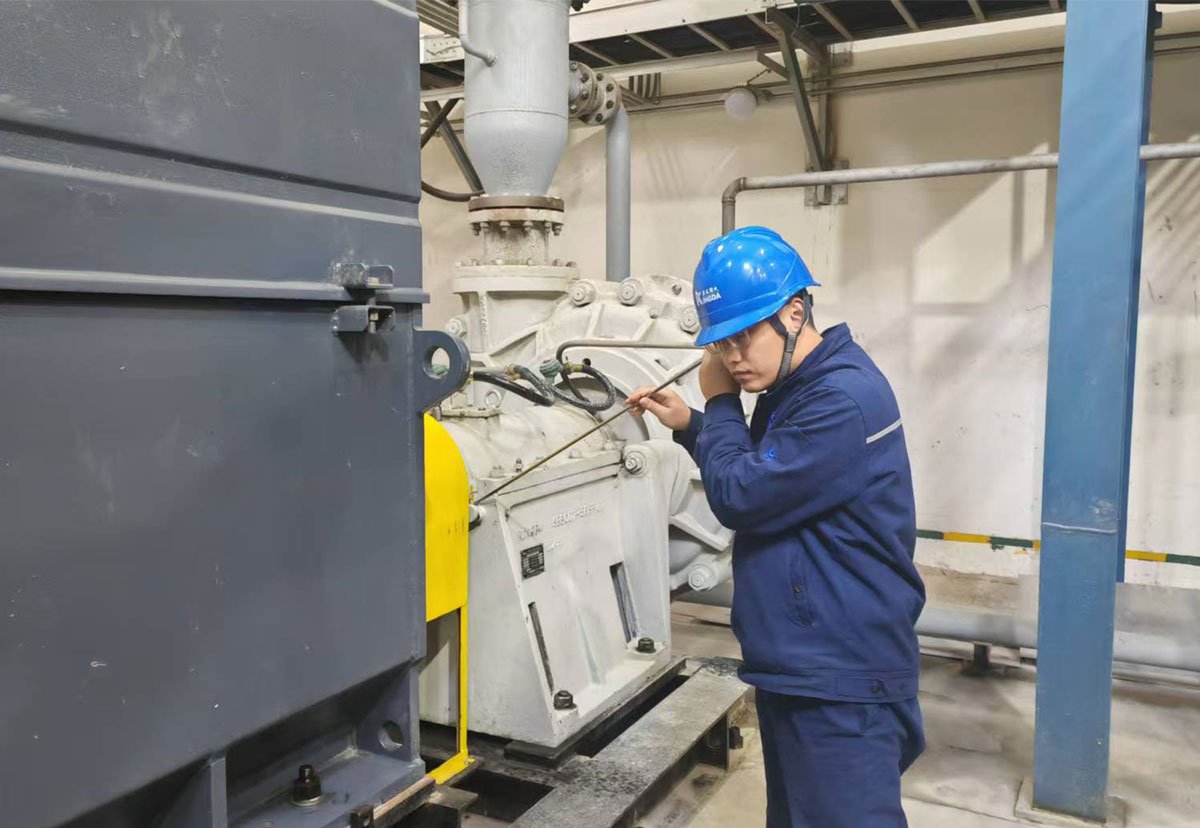
The Kingda filter press feed pump features a horizontal heavy-duty design, ensuring greater stability under high flow and high pressure conditions. Its horizontal design also facilitates maintenance. The wet-end parts are made of high-chrome wear material and provide strong abrasion resistance for suitable mineral slurry duties.
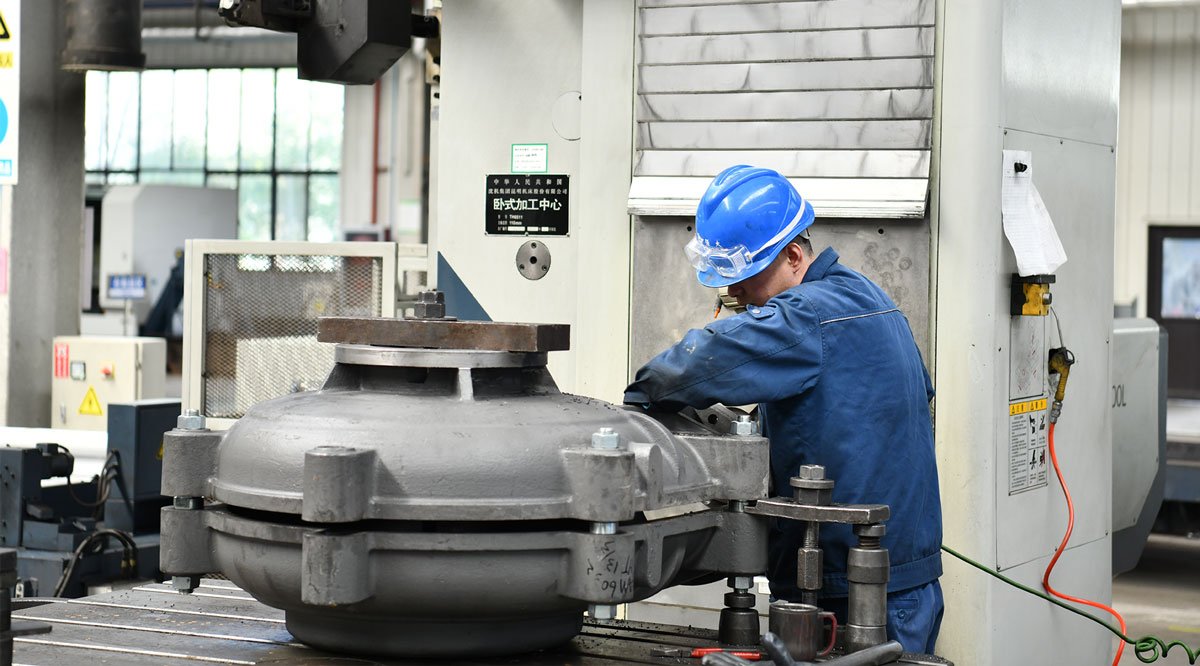
Since 1948, Kingda has focused on the research and development and manufacturing of slurry pumps. We possess extensive experience in fluid transport project design and provide customized services for complex slurry transport conditions. Our experience ensures we can provide you with comprehensive solutions.
Filter Press Feed Pump FAQs
The most common types of filter press pumps include centrifugal slurry pumps, piston diaphragm pumps, progressive cavity pumps, AODD pumps, peristaltic pumps, and plunger pumps. Each type of filter press pump has its own characteristics and application scenarios. When selecting a pump, we should choose the appropriate pump according to the requirements of the project to ensure production efficiency.
The pressure required by a filter press is not constant but varies throughout the filtration process. There is no fixed pressure; the required pressure depends on the filter press model, filter plate grade, filtration test, and slurry properties. The overall filtration process can be divided into four stages:
- Filling the filter chamber: In this stage, the slurry enters the filter chamber without resistance, and the required pressure is relatively low.
- Solid accumulation: As the amount of solids in the filter chamber increases, resistance begins to increase, and the required pressure rises.
- Filter cake formation: At this stage, the filter cake is almost fully formed, and resistance continues to increase, and even higher pressure is required.
- Dewatering: The filter cake is now fully formed and requires continuous squeezing to remove water. At this point, the maximum allowable feed pressure specified by the filter press OEM is reached.
Yes, a slurry pump can be used as a filter press feed pump. However, not all slurry pumps can be used as filter press feed pumps. Slurry pumps specifically designed for filter presses can pump at higher pressures and can adjust the flow rate and pressure according to the filtration process, enabling the filter press to work more efficiently.
The slurry pump is the best pump for abrasive slurries. Its robust structure is made of highly wear-resistant materials, such as high-chromium alloys, wear-resistant rubber, and ceramics. This allows the slurry pump to operate in the most demanding environments and provides excellent wear and corrosion resistance, enabling it to withstand the impact and friction of hard solid particles.
Chemical slurry pumps, which handle abrasive and corrosive substances, place extremely high demands on the pumping equipment. Heavy-duty slurry pumps replace the wet end parts with abrasion- and corrosion-resistant materials to meet specific conveying requirements, ensuring they can handle demanding operating conditions.
To overcome the resistance of the slurry passing through the filter chamber, because during the operation of the filter press, the slurry is continuously filled into the filter chamber, and the solids in the slurry are left behind by the action of the filter cloth. As the amount of solids increases, the resistance of the slurry to pass through also increases. At this time, only by increasing the pressure of the slurry can the slurry enter the filter chamber for filtration.
The filter cake is wet because it contains moisture, and there is excess moisture that has not been squeezed out. This may be due to insufficient pressure of the pumped slurry or damage or wear of the filter cloth or other filter materials.
There is no best material, only the most suitable material. Engineers usually use high-chromium alloys, wear-resistant ceramics, and wear-resistant rubber as pump materials. However, the choice of which material to use depends on the pumped medium and the conveying environment. The right material will effectively reduce wear and extend the service life of the pump.
ENGINEERING SUPPORT
Discuss Your Pumping Requirements With Our Engineers
Share your application and operating conditions. Kingda engineers will help identify the right pump type, materials and configuration for your duty.
Application-based pump selection
Material and seal recommendations
Global project and spare-parts support
Request Pump Selection Support
Privacy notice: Your information will only be used to evaluate your pumping requirement.
CONTACT INFO