Horizontal Centrifugal Pump
Choose the right horizontal centrifugal pump based on your medium, required flow and head, solids characteristics, material compatibility and sealing requirements.
The Kingda horizontal centrifugal pump boasts excellent abrasion and clogging resistance, ensuring stable and reliable operation even under the most demanding conditions, including when conveying large-particle fluids.
What is a Horizontal Centrifugal Pump?
A horizontal centrifugal pump, as the name suggests, is a centrifugal pump installed horizontally. Centrifugal pumps utilize the centrifugal force generated by the rotation of an impeller to drive fluids.
The advantages of this type of pump are its simple structure, reliable operation, and ease of maintenance. The horizontal structure makes the pump more stable during operation, reducing damage caused by abnormal vibrations.
Horizontal centrifugal pumps are commonly used to transport clean water, sewage, mud, slurry, etc., and are generally used in water supply and distribution systems, irrigation, industrial processes, sewage treatment, tailings, dredging, and other fields.
Horizontal centrifugal pumps are generally classified into horizontal single-stage centrifugal pumps, horizontal multistage centrifugal pumps, horizontal split-case centrifugal pumps, and horizontal centrifugal slurry pumps.
Due to their reliability, durability, high efficiency, and wide range of applications, they have become the most widely used type of pump. Today, with improved materials and optimized design, horizontal centrifugal pumps are becoming the choice of more and more companies.
Choosing the right horizontal centrifugal pump can maximize its service life. The selection should be based on factors such as the medium, flow rate, head, and pump material.
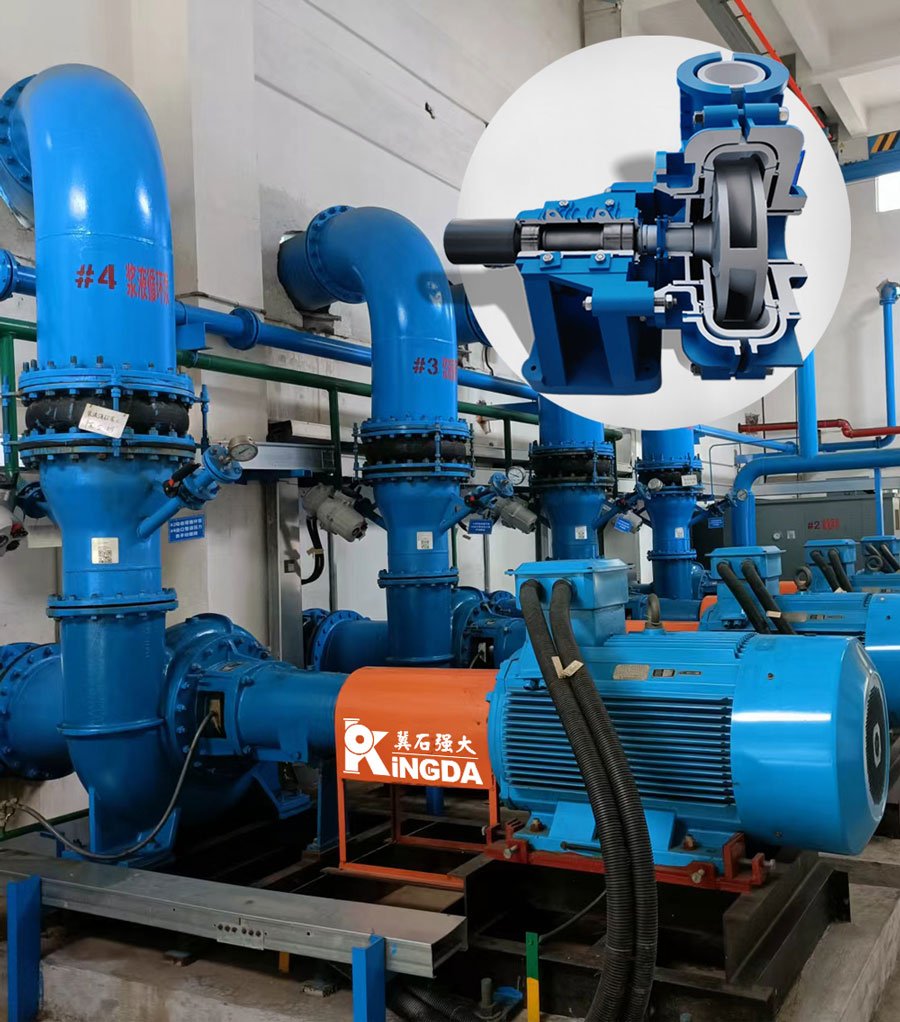
Which Horizontal Centrifugal Pump Should You Choose?
The selection of a suitable horizontal centrifugal pump should be based on your actual needs.
- For clean water and high-flow water supply: Choose horizontal split case pumps.
- For wastewater containing solids or fibers: Choose non-clog sewage pumps.
- For corrosive chemical liquids: Choose corrosion-resistant chemical process pumps.
- For abrasive slurry: Choose heavy-duty horizontal slurry pumps.
- For sand and gravel: Choose a dredge pump that allows large particles to pass through.
Select a Horizontal Centrifugal Pump by Medium
| Pumped Medium | Recommended Pump Type | Suitable Conditions | Important Selection Data | Product Link |
|---|---|---|---|---|
|
Clean water |
Split-case pump |
High-flow water supply, cooling and irrigation |
Flow, head, NPSH, efficiency | |
|
Wastewater |
Non-clog pump |
Sewage, sludge, fibers and soft solids |
Solids size, fiber content, impeller type | |
|
Chemicals |
Chemical process pump |
Acids, alkalis, seawater and petroleum liquids |
pH, temperature, corrosion and seal requirements | |
|
Abrasive slurry |
Horizontal slurry pump |
Mining, mineral processing and tailings |
Concentration, density, particle size and hardness | |
|
Sand and gravel |
Dredge pump |
Dredging, sand mining and marine projects |
Maximum particle size, pipeline distance and concentration |
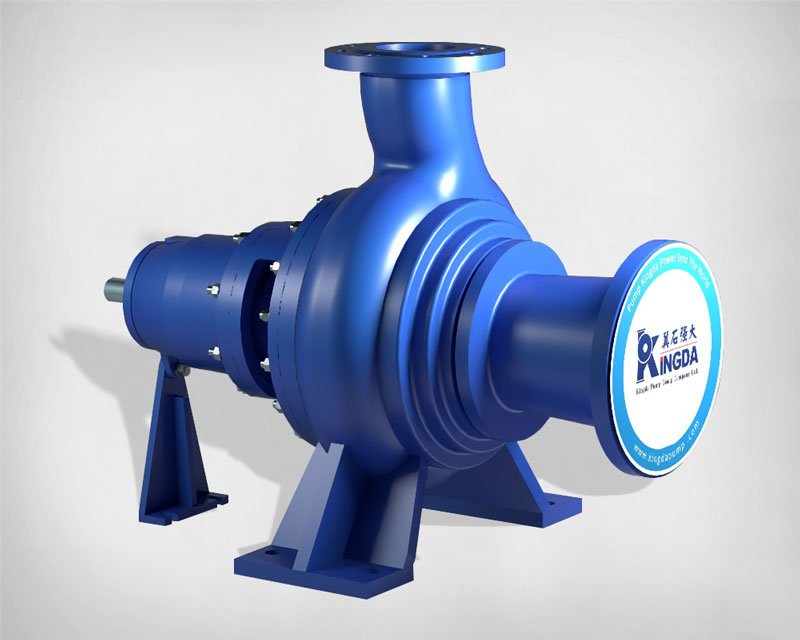
Horizontal Non-Clog Centrifugal Pump
🔸Discharge Diameter(mm): 40 ~ 500
🔸Capability(m³/h): 10 ~ 3000
🔸Head(m): 5 ~ 80
🔸Material: Highly wear-resistant alloy
🔸Applications: Wastewater, breweries, paper, petroleum, construction
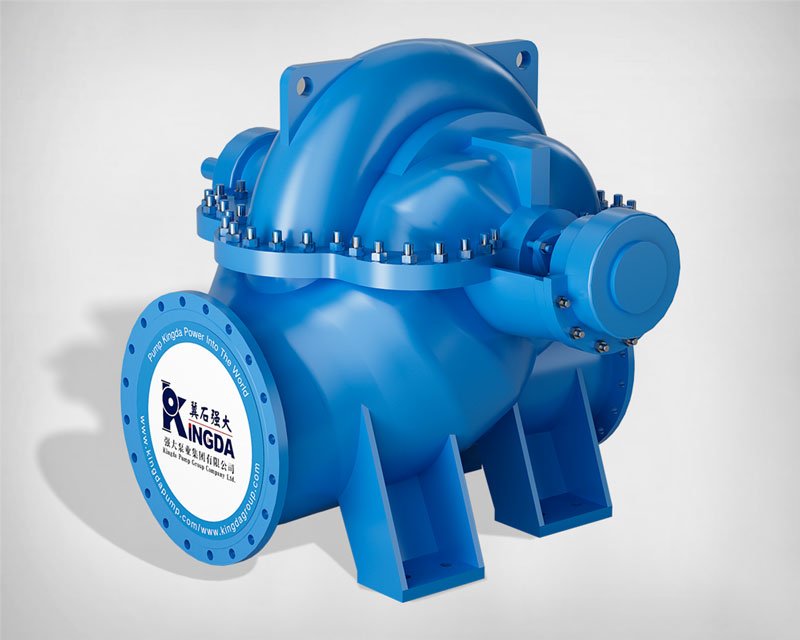
Horizontal Split Case Centrifugal Pump
🔸Discharge Diameter(mm): 300 ~ 1000
🔸Capability(m³/h): 1000 ~ 18000
🔸Head(m): 22 ~ 170
🔸Material: Highly wear-resistant alloy
🔸Applications: Water supply, power plant circulating water, irrigation
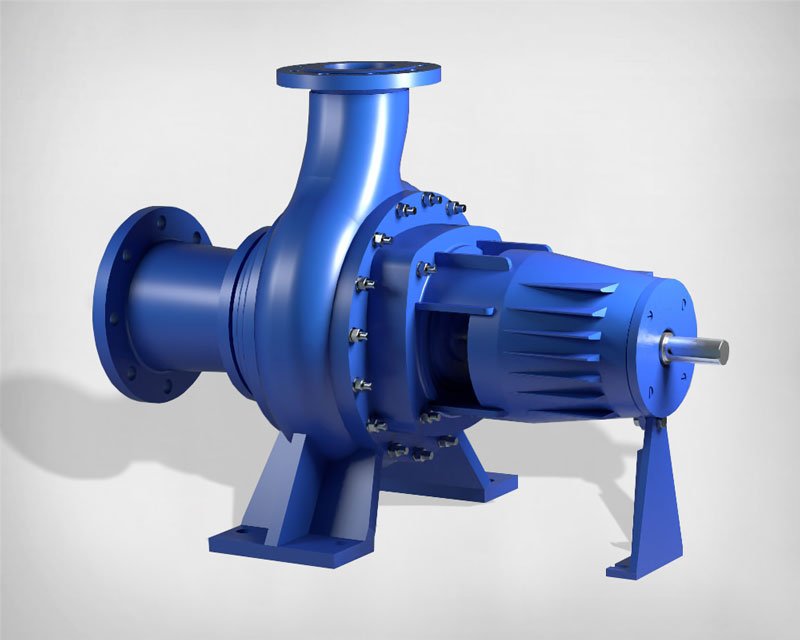
Horizontal Centrifugal Chemical Pump
🔸Discharge Diameter(mm): 25 ~ 400
🔸Capability(m³/h): 5 ~ 2600
🔸Head(m): 4 ~ 250
🔸Material: Highly wear-resistant alloy
🔸Applications: Oil, refineries, seawater, chemicals
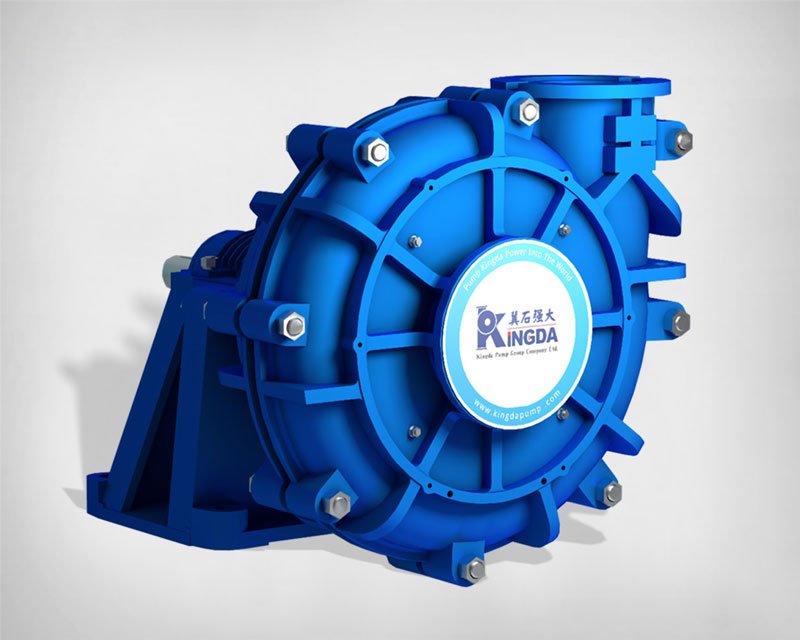
Horizontal Centrifugal Slurry Pump
🔸Discharge Diameter(mm): 20 ~ 650
🔸Capability(m³/h): 10 ~ 14000
🔸Head(m): 10 ~ 70
🔸Material: Highly wear-resistant alloy or Rubber
🔸Applications: Mining, tunnel boring machines, and metallurgy
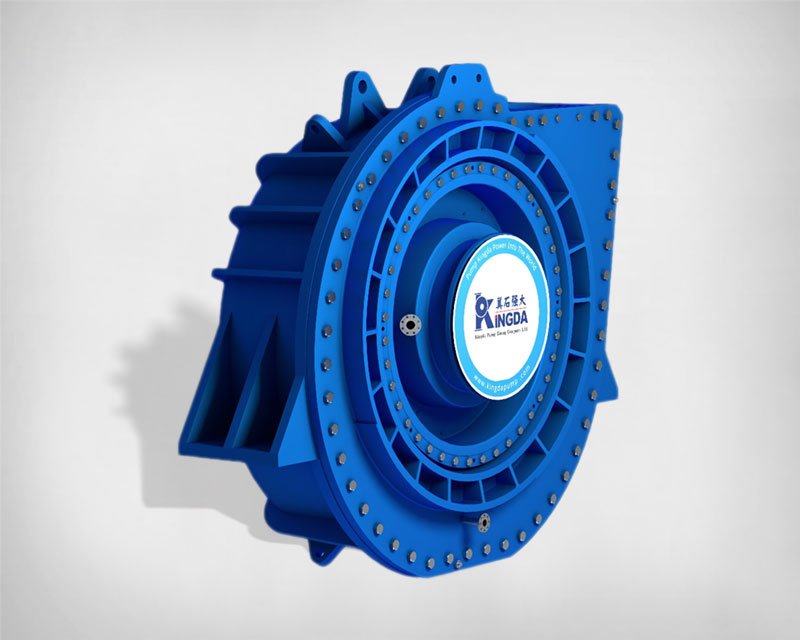
Horizontal Centrifugal Dredge Pump
🔸Discharge Diameter(mm): 200 ~ 1200
🔸Capability(m³/h): 600 ~ 25000
🔸Head(m): 20 ~ 80
🔸Material: Highly wear-resistant alloy
🔸Applications: Dredging, sand mining, mining dredgers
Types of Horizontal Centrifugal Pumps Compared
Horizontal centrifugal pumps are the most widely used type of pump due to their reliability, durability, high efficiency, and wide range of applications. Today, with improved materials and optimized design, horizontal centrifugal pumps are becoming the choice of more and more companies.
However, horizontal centrifugal pumps also have unavoidable limitations, such as requiring a larger footprint, needing to be primed before startup, and being difficult to use for conveying high-concentration, high-viscosity slurries.
| Pump Type | Impeller Design | Solids Handling | Main Strength | Main Limitation | Typical Use |
|---|---|---|---|---|---|
|
Split-case |
Double-suction closed impeller |
Low |
High flow and good hydraulic efficiency |
Not intended for abrasive solids |
Water supply |
|
Non-clog |
Vortex, channel or open impeller |
Medium |
Reduced blockage risk |
Efficiency varies by impeller type |
Wastewater |
|
Chemical process |
Closed or semi-open impeller |
Low to medium |
Corrosion and leakage control |
Requires precise material selection |
Chemical processing |
|
Slurry |
Heavy-duty open or semi-open slurry impeller |
High |
Abrasion resistance |
Requires slurry correction during selection |
Mining |
|
Dredge |
Large-passage impeller |
Very high |
Coarse-particle handling |
Larger power and installation requirements |
Dredging |
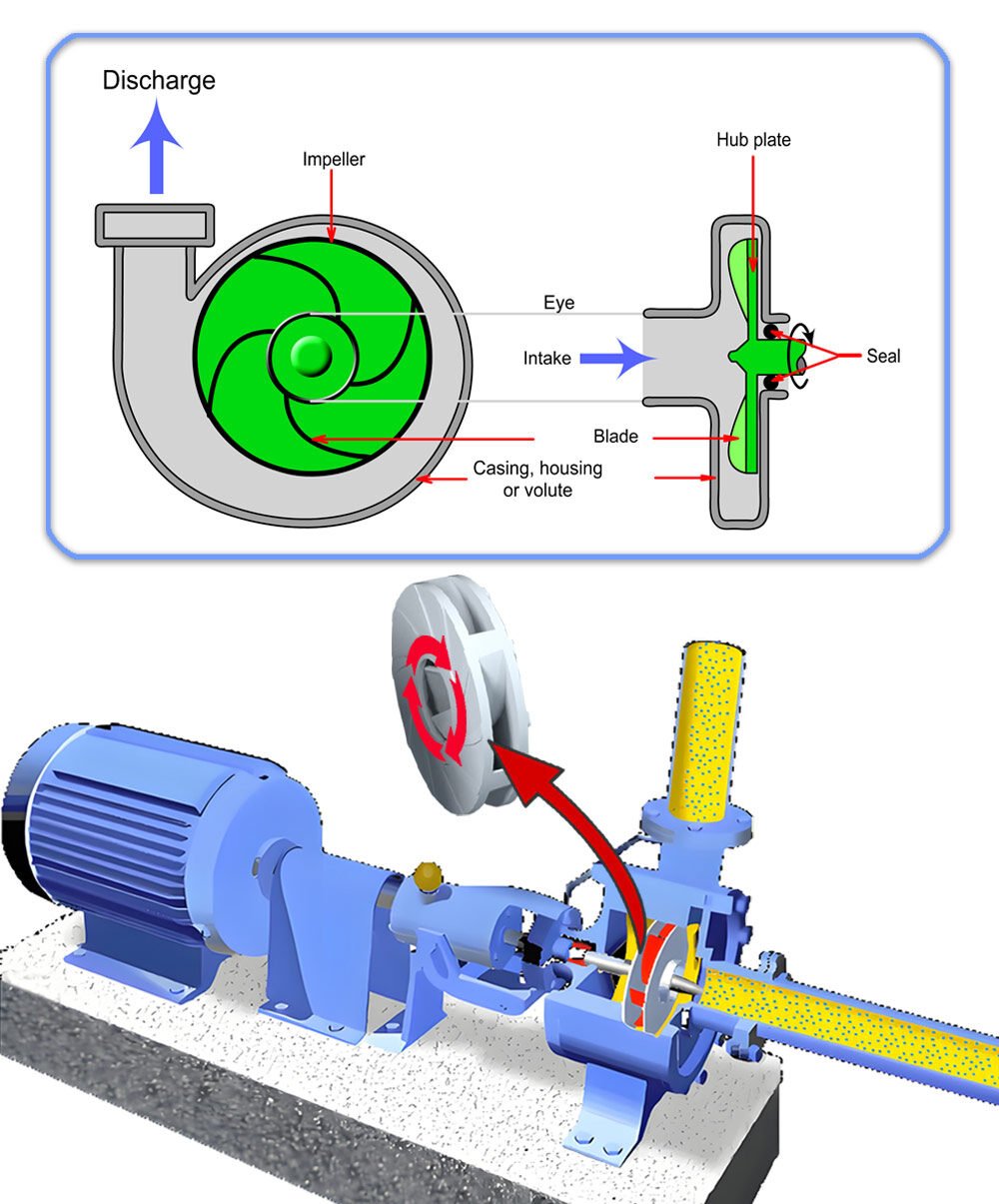
Horizontal Centrifugal Pump Working Principle
The working principle of a horizontal centrifugal pump mainly involves four steps, with the impeller being the key component. It is the core of the entire energy conversion process and the very essence of a centrifugal pump.
- Drive Unit Start-up: The drive unit is typically connected to the pump shaft via a coupling, and the impeller is also connected to the pump shaft. When the drive unit (motor, diesel engine) starts, the impeller, connected to the pump shaft, rotates at high speed. At this point, the initial electrical energy is converted into kinetic energy, generating centrifugal force.
- Fluid Intake: As the impeller continues to rotate at high speed, a pressure difference is created at the pump inlet, causing liquid to continuously enter the pump. Under the action of centrifugal force, the liquid is continuously thrown outwards by the impeller.
- Kinetic Energy → Pressure Energy: Due to the volute shape of the centrifugal pump casing, the flow path of the fluid within the pump gradually narrows. While the flow velocity decreases, the fluid pressure continuously increases.
- Fluid Discharge: After a series of energy conversions, the fluid increases in pressure as it passes through the pump, eventually being discharged at the pump outlet. The pump outlet is connected to a delivery pipeline to transport the fluid to more distant and higher areas.
The Kingda KWP series horizontal centrifugal pump features an anti-clogging impeller and uses high-chromium alloy as the pump material, giving it advantages such as wear and corrosion resistance. It can easily transport fluids containing solids, sludge, and even fluids containing long fibers without clogging.
The KWP horizontal centrifugal pump is widely used in sewage treatment, agricultural irrigation, animal manure processing, high-rise residential water supply and distribution systems, energy, industrial wastewater, and mining.
How to Select a Horizontal Centrifugal Pump?
| Step | Determinants |
|---|---|
|
1. Medium |
The pH, viscosity, solids concentration, and operating temperature of the medium directly determine the pump material and the type of pump required. |
|
2. Flow |
The flow rate and pump head are important factors to consider when selecting a pump. |
|
3. Head |
Based on the flow rate and head, the type of pump that meets the operating conditions can be found on the performance curve. |
|
4. Solids |
The diameter, hardness, and concentration of the solid determine the pump structure, the materials of the wet end parts, and the driving power. |
|
5. Materials |
Material selection mainly involves wet end parts that come into direct contact with the medium, such as wear-resistant materials, corrosion-resistant materials, and high-temperature resistant materials. Common materials include high-chromium alloys, stainless steel, and rubber. |
|
6. Seal |
The main function of shaft seals is to prevent media leakage. Common sealing methods for horizontal centrifugal pumps include mechanical seals, packing seals, and auxiliary impeller seals. The appropriate shaft seal should be selected according to the operating conditions. |
Optimized Structure and High-Performance Materials
Each part is designed for efficiency and reliability
🔶 Materials: Horizontal centrifugal pumps are generally made of materials such as ductile iron, high-chromium alloy, stainless steel, ceramics, and rubber. Different materials are selected for different operating conditions and environments.
🔶 Impeller: The impeller is the core component of a centrifugal pump. Impeller types generally include open impellers, semi-open impellers, and closed impellers, and materials include cast iron, wear-resistant alloys, ceramics, and rubber.
🔶 Pump Casing: The pump casing is the pump’s load-bearing container. The quality of the pump casing affects the pump’s pressure-bearing capacity. Kingda horizontal centrifugal pumps are available in double-casing, single-casing, and split-case types.
🔶 Bearings: Bearings are the devices connecting the impeller to the motor or diesel engine and are an important component of horizontal centrifugal pumps. Kingda uses thickened, wear-resistant bearings to ensure a sufficiently long service life.
🔶 Seals: Horizontal centrifugal pumps have various sealing methods, including packing seals, expeller seals, mechanical seals, etc. Kingda’s unique KFSD sealing system effectively filters impurities in the water, effectively extending the seal’s lifespan.
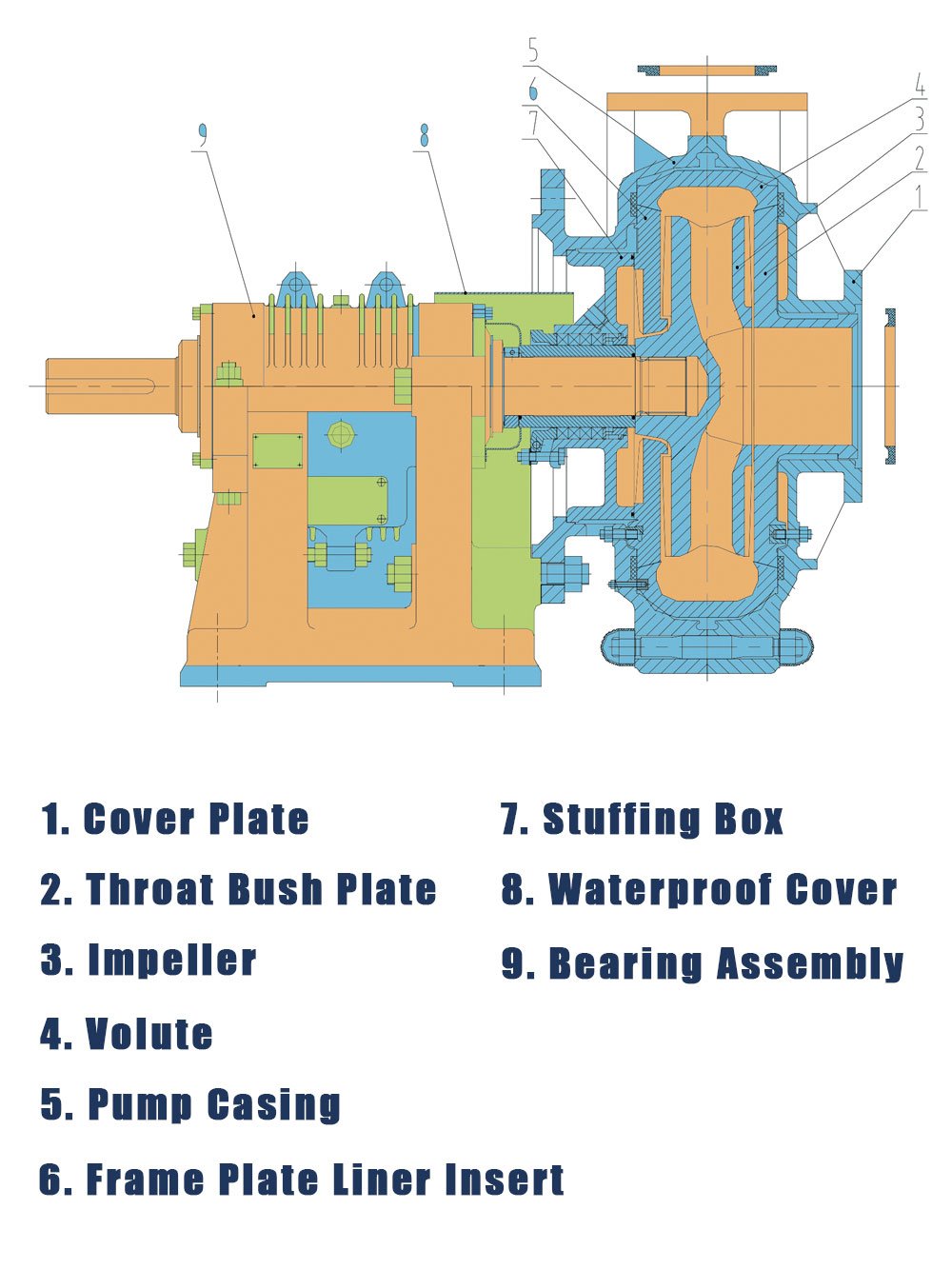
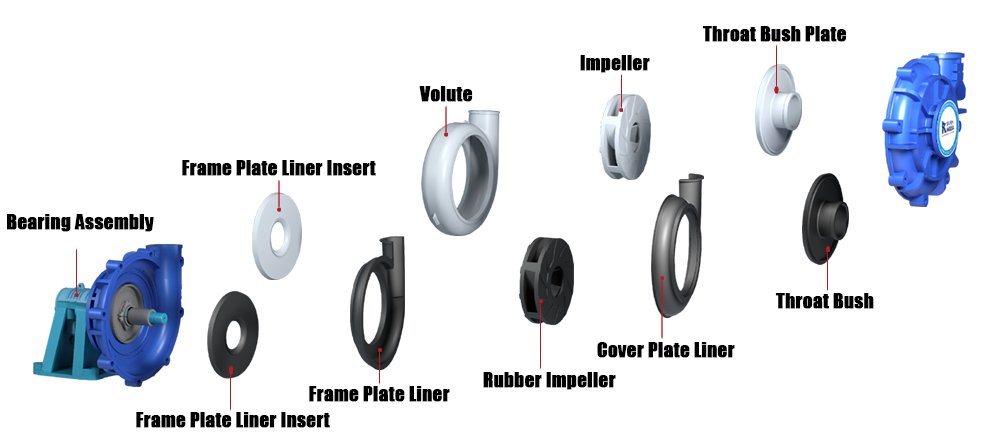
Horizontal Centrifugal Pump Diagram
The Horizontal Centrifugal Pump Diagram illustrates the basic structure of the pump.
In the Kingda KSH centrifugal pump diagram, we can see the main components of the pump, such as the Impeller, Frame Plate Liner, Bearing Assembly, Stuffing Box, and Cover Plate.
Horizontal Centrifugal Pump Curve
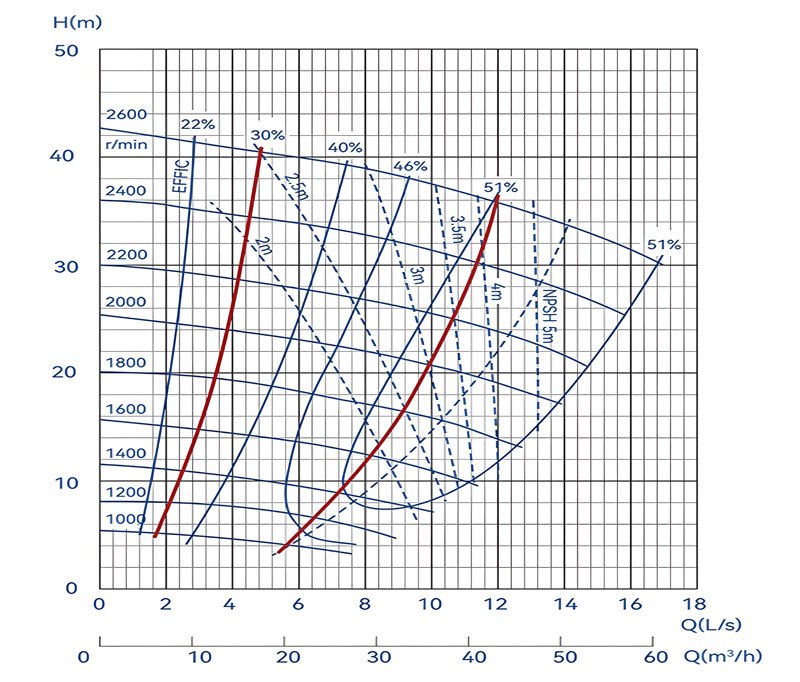
Horizontal Centrifugal Pump Curve Basic Information
X-axis: Flow Rate, Q
Y-axis: Head, H
The downward-sloping curve represents the pump’s speed curve.
The red upward-sloping curve is the efficiency curve; ensure the pump is within the efficiency curve’s range during selection.
The vertically upward-sloping dashed line represents the NPSH value; ensure NPSHA>NPSHR during selection.
The vertically upward dashed line represents the NPSH value. When selecting a model, it is essential to ensure that NPSHA > NPSHR to avoid cavitation.
How to select a pump from the pump performance curve?
1. First, determine your required flow rate and head.
Based on the head and flow rate, find the intersection of the X-axis (flow rate) and Y-axis (head).
2. Determine if the efficiency and pump speed at the intersection are within the ideal range.
3. This step is only suitable for initial, simple selection. For professional, free selection services, please contact us.
The Kingda KSH M250 horizontal centrifugal pump features an impeller made of high-chromium alloy. Engineers have optimized the impeller and flow channels, enabling the KSH centrifugal pump to overcome highly abrasive conditions and avoid the risk of clogging.
The KSH series heavy-duty horizontal centrifugal slurry pump boasts outstanding performance. Designed from the outset to meet continuous operation and clogging-free performance, it offers 20% more redundancy than standard, easily pumping even large solid particles.
Real-World Applications of Horizontal Centrifugal Pumps
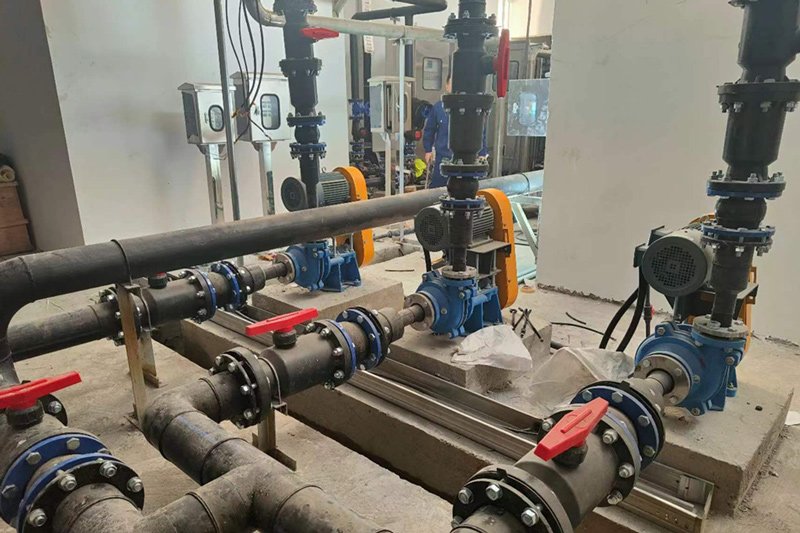
Wastewater
This is a wastewater transport system Kingda designed for a wastewater treatment plant in a Singapore city.
We used dozens of wastewater pumps to efficiently treat the wastewater from the entire area, saving approximately 47% in costs compared to previous systems.
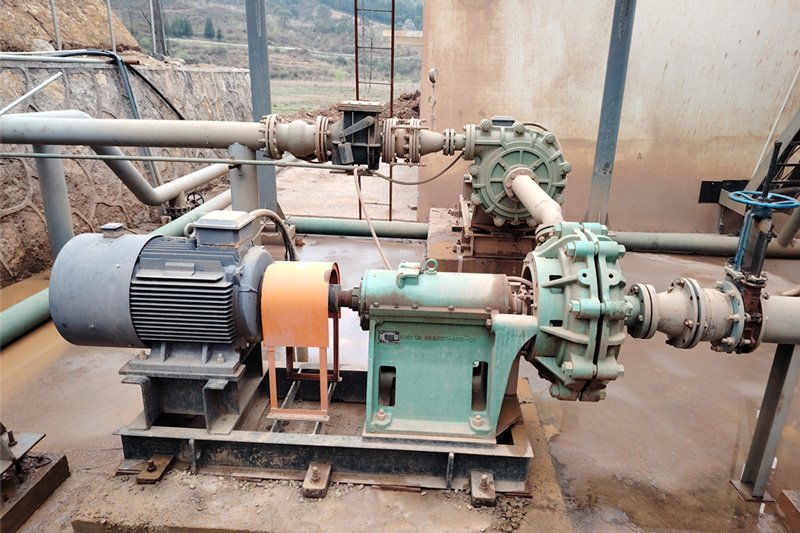
Mining
This is a zinc and iron ore project in the Russian Far East.
We used Kingda ZGB series horizontal centrifugal slurry pumps to effectively transport tailings to the treatment equipment.

Dredging
In 2008, Kingda manufactured what was then the largest diameter dredge pump in Asia and successfully installed it on a large dredger, achieving a pumping capacity of 38,000 m³/h.
Even now, this is still incredible.
Shield Tunneling
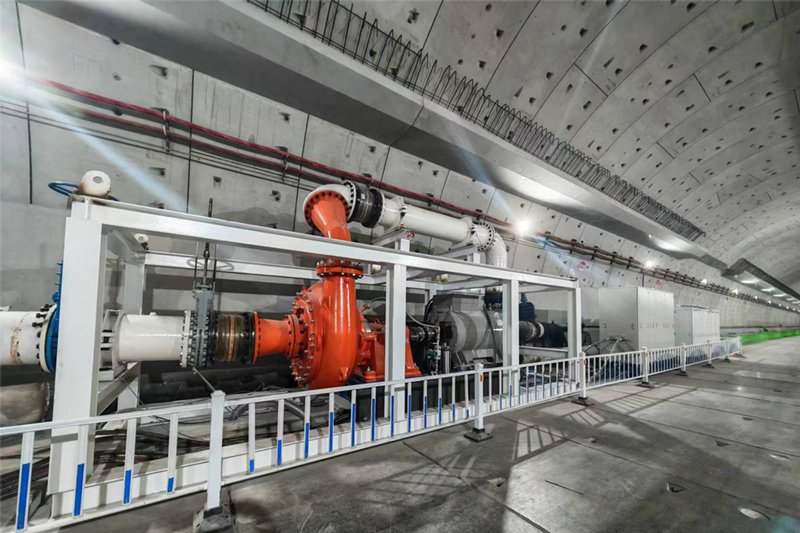
This is a Shanghai Metro tunnel project.
We customized a booster pump station system for this project, meeting the requirements for ultra-long-distance, long-duration slurry transport, greatly improving work efficiency and reducing personnel costs.
Horizontal Centrifugal Pump Manufacturers, Since 1948
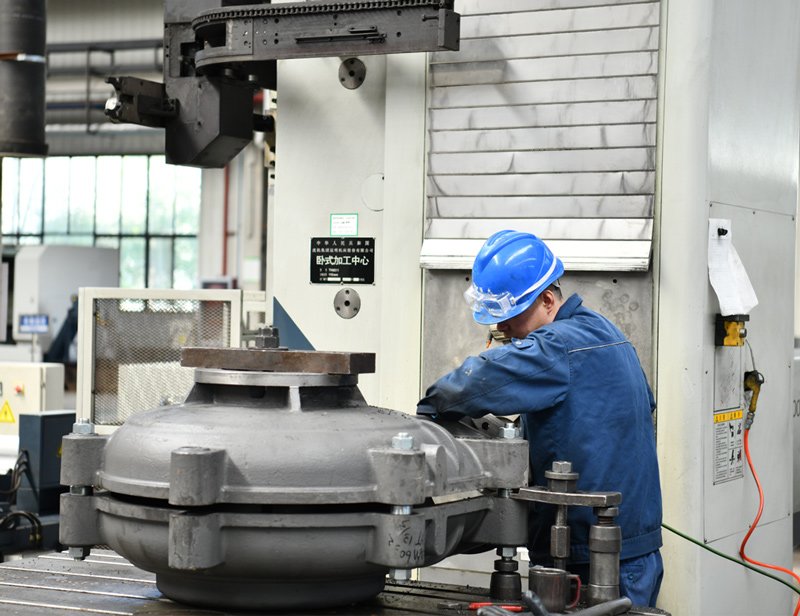
Since 1948, Kingda has been dedicated to the research and development and manufacturing of horizontal centrifugal pumps. With decades of experience, we produce a wide range of horizontal centrifugal pumps to meet the pumping needs of various industries, including municipal water supply, drainage, sewage treatment, petroleum, chemical, mining, tunnel boring machines, dredging, and agriculture.
We ensure that our experience allows us to provide you with the most competitive products. We are not limited to the pumps themselves; our expertise enables us to provide customized fluid transport solutions. Facing harsh and complex operating conditions, our engineers can quickly diagnose key project issues and design optimal solutions.
Kingda boasts a professional maintenance team with comprehensive and impressive knowledge. Years of maintenance experience allow them to quickly identify pump maintenance problems and provide customers with complete maintenance information and techniques, minimizing user costs.
FAQ
Vertical centrifugal pumps are installed vertically, which saves space and allows for installation even in confined spaces, sometimes without requiring a separate pump house. However, vertical centrifugal pumps are more difficult to maintain and disassemble compared to horizontal pumps.
Horizontal centrifugal pumps are characterized by their stability, but their horizontal structure requires more space and may necessitate a separate pump house. However, they are simpler to maintain and easier to disassemble than vertical centrifugal pumps.
Whether it is a horizontal or vertical centrifugal pump, priming is required. Before operation, the pump should be filled with water to purge the air from the pump.
NPSH stands for Net Positive Suction Head, a crucial indicator for determining whether pump cavitation has occurred.
Pump cavitation primarily occurs because the liquid pressure at the pump inlet is too low, causing the liquid to vaporize and form tiny bubbles. To prevent pump cavitation, NPSHa > NPSHr, meaning the system's available net positive suction head (NPSH) must be greater than the pump's required NPSH.
Horizontal centrifugal pumps are characterized by their stability, but their horizontal structure requires more space and may necessitate a separate pump house. However, they are simpler to maintain and easier to disassemble than vertical centrifugal pumps.
Whether it is a horizontal or vertical centrifugal pump, priming is required. Before operation, the pump should be filled with water to purge the air from the pump.
End-suction pumps are single-suction, single-stage centrifugal pumps with a simple structure and easy maintenance. They are suitable for small to medium flow rate applications and are generally used in water supply, circulating water, and industrial water transportation.
Split-case pumps, on the other hand, have a double-suction structure and are suitable for high flow rate transportation. They are generally used in municipal water supply, large pumping stations, and irrigation systems. Their split-case design makes maintenance easier, but they are larger and require more floor space.
Multistage pumps have multiple impellers and are typically used in high-head and high-pressure applications. They are more difficult to maintain and have higher costs, making them suitable for high-pressure water supply, mine drainage, and other high-pressure transportation applications.
Vibration, low flow, and leakage are usually caused by component wear, mechanical imbalance, and blockage, such as impeller imbalance, pump cavitation, debris clogging the pipeline, impeller wear, and loose bolts. The specific cause should be checked in detail by professional maintenance personnel to ensure that the pump equipment can operate normally and extend its service life.
Horizontal Centrifugal Pump Parts
| Wet End Wear Parts | Bearing Parts | Shaft Seal Parts | Other Parts |
|---|---|---|---|
| | |||
| | | ||
| | | ||
| | | | |
| | | | |
| | | |
Submit Your Duty Conditions
Provide the medium, flow, total head, solids data, suction conditions, pipeline information, material and seal requirements, and power supply.
Our engineers will review your operating conditions and recommend a suitable pump model and configuration. Estimated values or existing pump datasheets can also be submitted.