Sea Water Pump
Kingda provides professional solutions for pumping seawater, whether it’s clean/screened seawater or solids-laden seawater. Kingda engineers can handle it with ease, providing customized solutions based on the required flow rate, head, salinity, solids, and other conditions of the project.
Which Sea Water Pump Fits Your Duty?
The first step is to determine whether the pump is pumping clean seawater or seawater containing impurities and solids, as this determines the pump’s materials, hydraulic design, and solids handling capacity.
| Duty | Selection direction |
|---|---|
|
Clean or screened seawater |
Based on factors such as flow rate, head, NPSH, and corrosion from seawater chlorides, high-efficiency pumps should be selected first. |
|
Seawater with sand, silt or larger solids |
Based on factors such as the particle size, density, and abrasiveness of the solid, priority should be given to pumps with good anti-clogging ability, wear resistance, and ease of maintenance. |
The final pump model and materials must be determined based on factors such as the pump curve and the characteristics of the seawater being pumped.

Sea water pumps are specifically designed for conveying seawater, salt water, or corrosive liquids. They are commonly used in ship cooling water systems, seawater desalination, seabed sand mining, and seawater circulation.
To avoid corrosion and abrasion from seawater, sea water pumps are typically made of special materials, such as duplex stainless steel, bronze, alloys, and composite materials, to withstand chloride corrosion and solid abrasion properties of seawater and ensure durability in high-salt, high-solids environments.
Sea water pumps generally employ a centrifugal structure. When selecting a pump, the material should be chosen based on the medium being conveyed to ensure durability and achieve optimal service life.
Sea Water Pump Applications and Operating Conditions
Seawater pumps are commonly used for pumping seawater, including drawing seawater from the ocean and transporting it to target areas, circulating seawater on offshore platforms, transporting seawater containing solids, pressurizing seawater, and discharging wastewater.
Pump Sea Water: The primary use of a seawater pump is to pump seawater. For example, in a seawater pumping system, it is used to draw chloride-rich seawater from the ocean and pump it to a designated area.
Seawater Circulation: Continuous seawater circulation is required in the cooling systems of some offshore platforms, aquaculture systems, or ships to ensure stable temperature and water quality.
Pumping Seawater Containing Solids: Seawater often contains sand, gravel, stones, long fibers, and even debris. Ordinary water pumps struggle to handle these solids, often leading to blockages. Seawater pumps, however, can easily handle solids and possess excellent abrasion resistance.
Seawater Pressurization: Seawater lift pumps can provide sufficient pressure for offshore platforms or water supply systems, enabling the transport of seawater to structures or equipment tens of meters high.

Media and Selection Focus
| Application | Medium condition | Main selection concern |
|---|---|---|
|
Seawater cooling and circulation |
Raw seawater, filtered seawater, containing a small amount of impurities, containing chloride ions |
High flow rate, continuous operation, net positive suction head, total dynamic head |
|
Desalination intake and transfer |
Raw water, containing suspended solids, temperature and salinity variations, and containing chemical reagents. |
Water intake level, stable flow rate and pressure, materials |
|
Offshore seawater lift and wash-water systems |
Raw seawater, containing shells and seaweed, liquid level changes, high chloride ion corrosion |
Installation method and depth, low net positive suction head (NPSH), maintainability |
|
Sand-, silt- or solids-laden seawater handling |
Seawater containing solids and fibers, high abrasiveness, solid concentration, density, shape |
Solid throughput, abrasion-resistant materials, shaft seals, motors, and maintenance |
Kingda Sea Water Pump Catalogue

🔸Discharge Diameter(mm): 25 ~ 400
🔸Capability(m³/h): 5 ~ 2600
🔸Head(m): 4 ~ 250
LC Series End Suction Pump:Medium flow rate/head for seawater or corrosive liquids
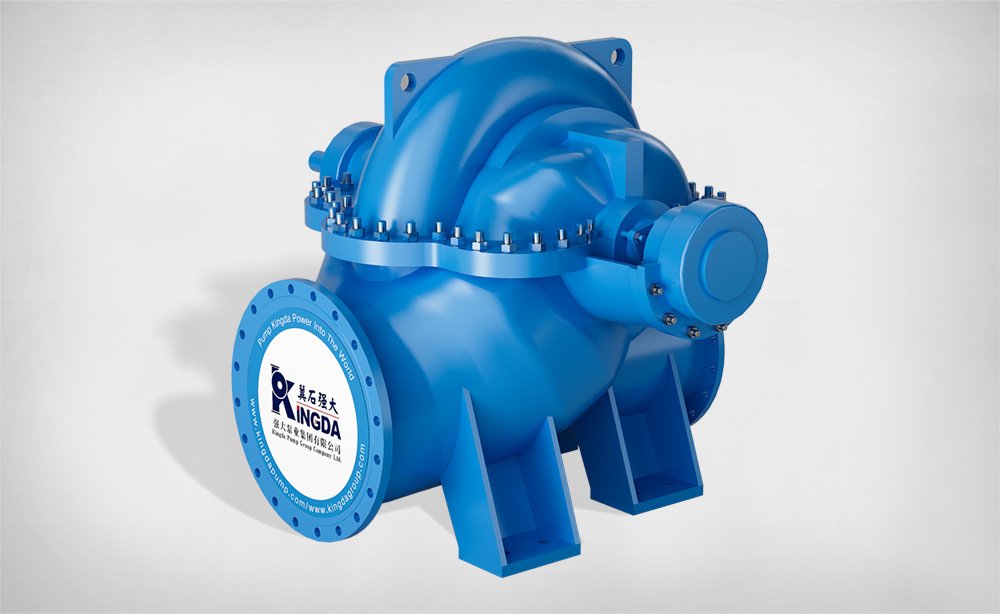
🔸Discharge Diameter(mm): 300 ~ 1000
🔸Capability(m³/h): 1000 ~ 18000
🔸Head(m): 22 ~ 170
SXK Split Case Pump:High-flow-rate, clean or filtered circulating seawater
Sea Water Pump Performance Curves
LC Sea Water Pump Performance Curve

SXK Split Case Pump Performance Curve

Sea Water Pump Material
The choice of materials for a sea water pump is a crucial factor affecting its reliability and lifespan. Only by selecting suitable materials can the pump’s stability during operation be guaranteed.
Stainless Steel
The biggest characteristic of stainless steel is its resistance to rust and corrosion, and it exhibits excellent stability in oxidizing media.
Stainless steel sea water pumps can maintain excellent stability when conveying chemically corrosive substances of varying temperatures and concentrations.
Bronze
Bronze is a commonly used material for sea water pumps. It is more corrosion-resistant than ordinary steel and easier to process, making it suitable for most seawater applications.
However, its abrasion resistance is not as good as wear-resistant alloys.
Wear-resistant alloys
Wear-resistant alloys are particularly suitable for seawater containing a large amount of solid particles, such as gravel, mud, and long fibers. In these situations, choosing wear-resistant alloy materials is the best option.
Wear-resistant alloys not only resist chemical corrosion but also have high abrasion resistance.
Seawater contains a large amount of corrosive substances. We must not only ensure the seawater pump is sufficiently corrosion-resistant, but also withstand the high-speed impact of gravel in the seawater. These hard solid particles in seawater can severely abrade the metal surface, significantly shortening its service life.
Kingda has developed a variety of corrosion-resistant and abrasion-resistant materials tailored to the different physical properties of seawater. Verified through numerous projects, this effectively extends the pump’s service life, enabling long-term operation and minimizing maintenance frequency, thus solving the problem of inconvenient maintenance when used at sea or on ships.
Ready to choose the right sea water pump for your application?
Share your operating conditions with us at info@kingdagroup.com — our engineers will recommend the optimal pump solution for your seawater system.
How Kingda Sea Water Pumps Deliver Reliable Performance

Customized Materials
Kingda engineers select the most suitable materials based on the materials being pumped, ensuring optimal service life, significantly reducing maintenance frequency, and improving pumping efficiency.
Long Service Life
Compared to ordinary water pumps, Kingda sea water pumps offer superior corrosion and abrasion resistance, maintaining a longer service life even during long-term seawater pumping.
Clog-Free Operation
To accommodate large particles, engineers have optimized the impeller and flow channels, allowing easy passage of stones, fibers, and even debris, ensuring long-term reliability.
Excellent Sealing
Kingda's shaft sealing system boasts unparalleled reliability, guaranteeing excellent sealing even during long-term pumping of corrosive liquids containing oxides.
Looking for the right sea water pump for your application?
Contact us at info@kingdagroup.com for technical guidance and a fast, accurate quotation.
China End Suction Sea Water Pumps Manufacturer, Since 1948
As one of China’s earliest sea water pump suppliers, Kingda Pump Group possesses extensive experience, ensuring we can meet your needs.
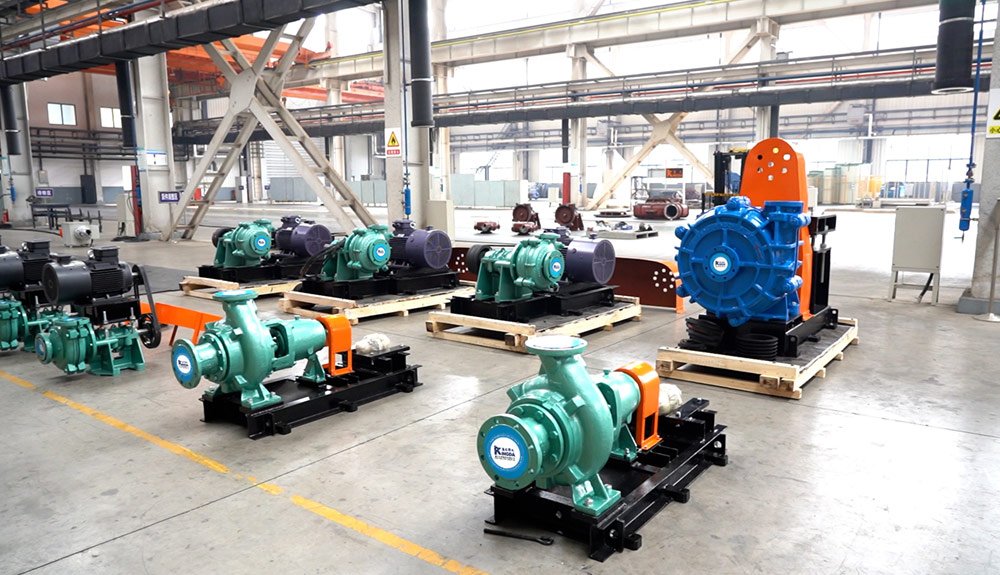
We have a complete sea water pump manufacturing chain, from material research and development to casting and final installation. We rigorously control every step to ensure the production of pumps of the highest quality.
Kingda has a professional team of maintenance engineers with comprehensive knowledge, capable of quickly resolving maintenance issues for customers. When you encounter seawater pumping problems, our engineers can provide you with complete solutions immediately, minimizing downtime and saving costs.
Sea Water Pump Parts
| Wet End Wear Parts | Bearing Parts | Shaft Seal Parts | Other Parts |
|---|---|---|---|
| | |||
| | | ||
| | | ||
| | | | |
| | | | |
| | | |
FAQ
Ordinary water pumps cannot be used to pump seawater because seawater contains corrosive compounds and a large number of solid particles. Water pumps are primarily designed to transport clean water and do not possess corrosion-resistant or abrasion-resistant properties.
Get an Engineered Sea Water Pump Selection
Send your duty point and seawater conditions. Kingda engineers will review the pump type, wetted materials, preliminary performance curve and quotation.