Froth Pump
When conveying air-containing flotation slurry, the froth pump can guide the foam slurry into the pump more evenly, avoiding air lock caused by bubble accumulation, which can lead to inrush and energy loss.
What Is a Froth Pump and Why Does Air Lock Occur?
A froth pump is designed to handle air-entrained, frothy slurry generated in flotation circuits, which consists of liquid, solids, and entrained air. Froth pumps are primarily used in mining and mineral processing.
Because frothy slurry contains a high concentration of fine, stable bubbles, entrained air can gradually accumulate and coalesce near the impeller eye during operation, forming an air pocket that restricts the incoming slurry. This can cause fluctuations in pump flow and head and, in severe cases, a complete loss of pumping.
APPLICATION AREAS
Froth Pump Applications
The Kingda froth pump is capable of handling highly aerated frothy slurries. Especially when transporting froth slurries with fine particles, such as frothy tailings, asphalt froth, and air-entrained slurries, its unique impeller and conical sump design can significantly enhance the conveying efficiency, reduce entrained-air buildup, and enable the slurry to be transported to the subsequent steps more steadily.
Flotation concentrate transfer
Frothy tailings and fine-particle slurry
Abrasive, air-entrained process slurry
Metalliferous and coal flotation circuits
Mineral processing sumps
Selected chemical or industrial froth duties
Kingda Froth Pump
Kingda froth pump has an induced impeller design, located at the front end of the main impeller, similar to a propeller, which can effectively dissipate and reduce the size of froth, improve the passing capacity of slurry, and ensure the highest concentrate conveying efficiency and mineral recovery rate.
During flotation processing, that is, ore separation, there are many froths containing metal particles on the surface of the slurry. These induced impellers will reduce the inlet pressure before these slurries enter the pump inlet, so that the froth slurry enters the pump faster and more evenly, and is quickly discharged, which prevents the accumulation of bubbles to the maximum extent, thereby preventing air lock or cavitation from causing pump vibration.
How Kingda Froth Pumps Handle Entrained Air
Induced Impeller
The KSHF froth pump features an induced impeller design, located at the front end of the impeller, similar to a propeller. This design is capable of effectively dissipating and reducing the size of the froth bubbles, enhancing the throughput capacity of the frothy mineral slurry, and ensuring the highest concentrate transportation efficiency and mineral recovery rate.
Conical Sump and Vortex Air Separation
The conical sump of the KSF froth pump can help provide a stable feed to the pump. The frothy slurry enters the sump through a tangential inlet and forms a vortex. The entrained air moves toward the vortex core and escapes upward. The partially deaerated slurry then flows into the impeller inlet.
Wear-material Options
The wear parts of the Kingda froth pump can be made of materials selected based on parameters such as the type of ore, particle size, concentration, pH and temperature, in order to resist the wear and corrosion of the slurry and effectively extend the service life.

Horizontal vs Vertical Froth Pump
| Comparis | KSHF Horizontal | KSF Vertical |
|---|---|---|
|
Configuration |
Horizontal, Inducer impeller, Large inlet |
Vertical cantilever structure, Conical sump |
|
Froth-Handling Features |
Improve the ability of the frothy slurry to enter the impeller eye |
The vortex helps separate entrained air from the slurry before it reaches the impeller. |
|
Performance Range |
10–1600 m³/h;10–68 m |
10–1000 m³/h;5–30 m |
|
Suitable For |
Higher-flow, higher-head duties and conventional horizontal pump installations |
Integrated-sump installations with no submerged shaft seal |
Horizontal Froth Pump
Vertical Froth Pump
Froth Pump Types & Spec
Kingda provides two structures of froth pump (horizontal and vertical), which enables Kingda froth pump to cover most application scenarios, with more flexible installation solutions, solving complex froth slurry transportation problems.
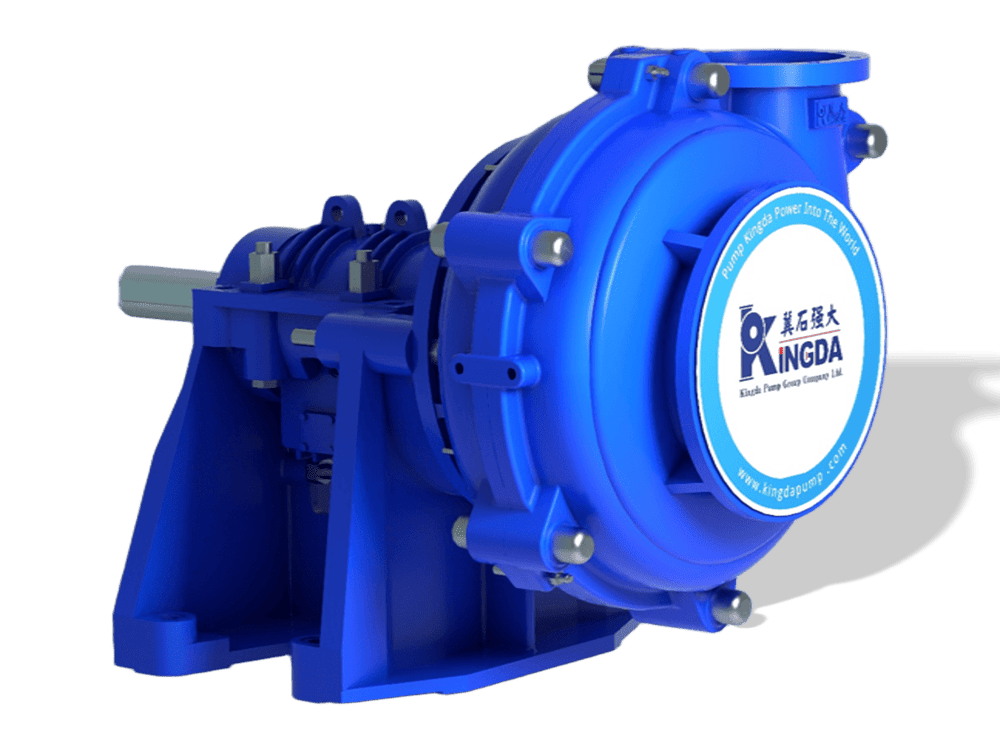
KSHF Horizontal Froth Pump
Kingda horizontal froth pump has a horizontal structure and uses an induced impeller design, which contacts the liquid earlier, resulting in better suction performance of the froth pump and higher slurry transmission efficiency.
- Discharge Diameter (mm): 50 – 200
- Flow Rate (m³/h): 10 – 1600
- Head (m): 10 – 68
- NPSH (m): 1 – 6
- Material: Wear resistant alloy
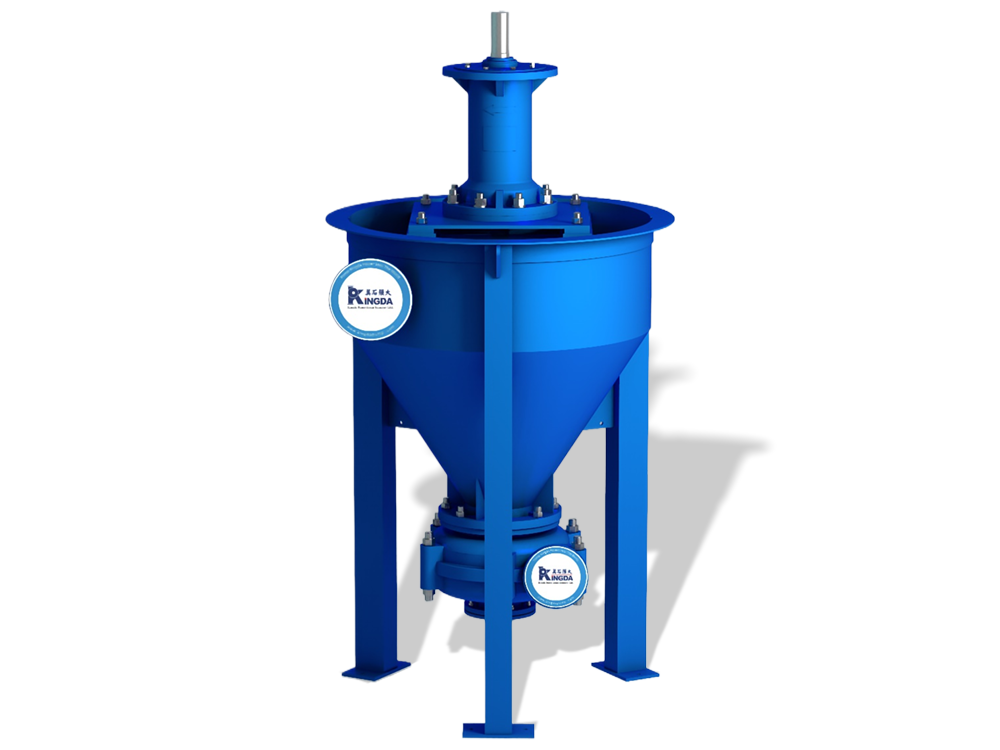
KSF Vertical Froth Pump
Kingda vertical froth pump is a vertical structure with cantilever design. It does not need shaft seal. The conical storage tank forms vortex, which effectively increases gas discharge and prevents airlock.
- Discharge Diameter (mm): 50 – 200
- Flow Rate (m³/h): 10 – 1000
- Head (m): 5 – 30
- NPSH (m): 1 – 6
- Material: Wear resistant alloy
Slurry Pump Parts
| Wet End Wear Parts | Bearing Parts | Shaft Seal Parts | Base |
|---|---|---|---|
| | |||
| | |||
| | | ||
| | | ||
| | | | |
| | | | |
| | | |
ENGINEERING SUPPORT
Discuss Your Pumping Requirements With Our Engineers
Share your application and operating conditions. Kingda engineers will help identify the right pump type, materials and configuration for your duty.
Application-based pump selection
Material and seal recommendations
Global project and spare-parts support
Request Pump Selection Support
Privacy notice: Your information will only be used to evaluate your pumping requirement.
CONTACT INFO